


 By neha - June 24, 2026
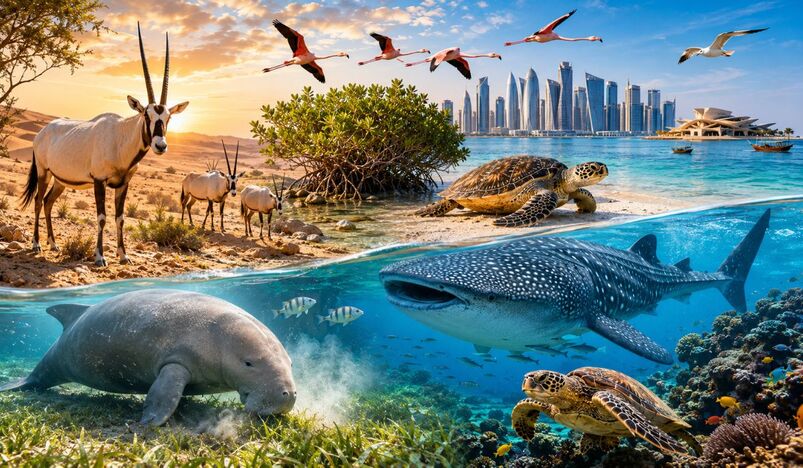
Threats Facing Qatar's Wildlife in 2026
Coastal Development
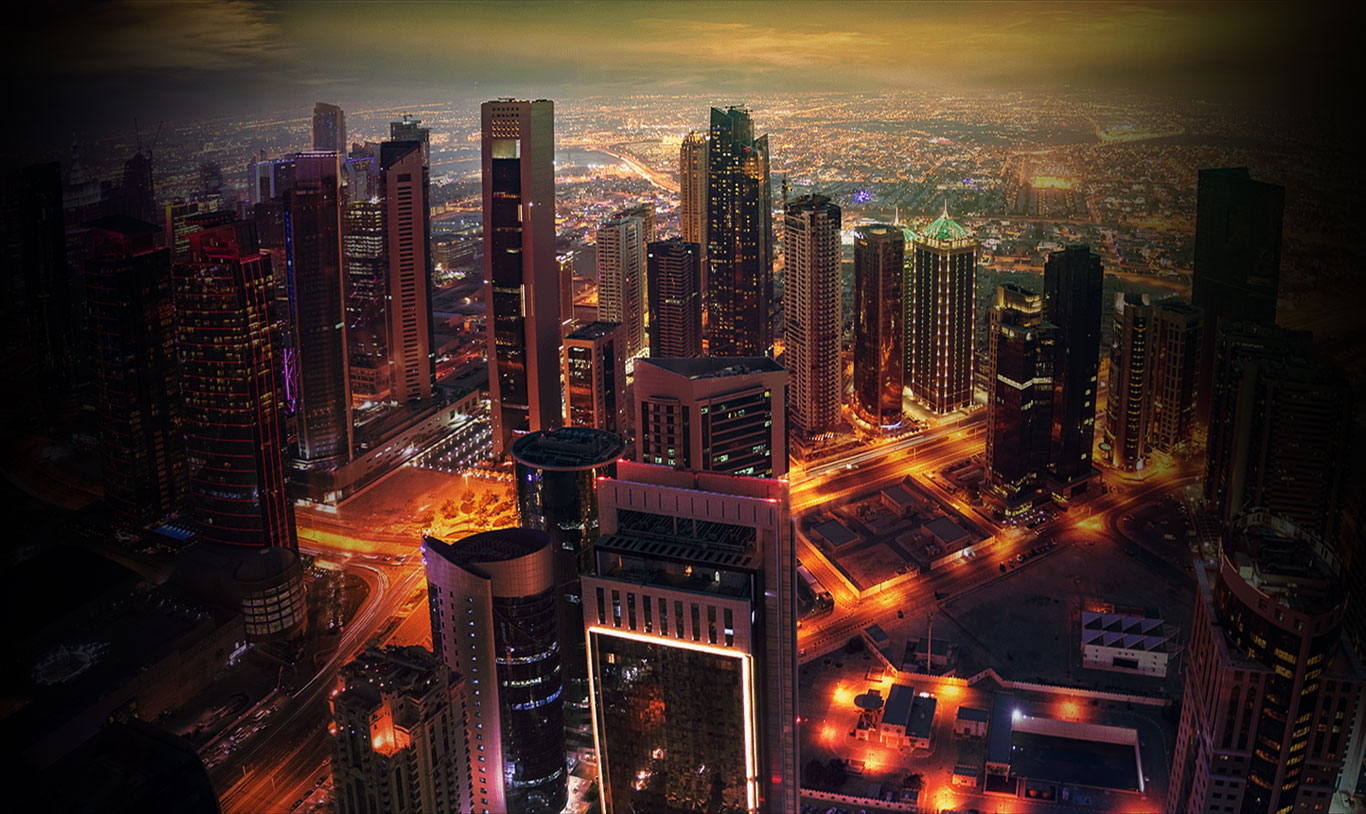
Land reclamation, dredging, and shoreline modification for ports, marinas, and artificial islands directly remove and degrade tidal flats, seagrass beds, and mangrove fringes. These habitats cannot be replaced quickly. Their loss removes the foundation of Qatar's coastal and marine food web.
Marine Heatwaves
The Persian Gulf is shallow and warming rapidly. Marine heatwaves already cause localised seagrass die-off and coral bleaching in Gulf waters. As events become more frequent and intense, seagrass meadows face growing pressure. Without seagrass, the dugong population that depends on it becomes vulnerable.
Recreational Disturbance
Off-road driving in desert areas damages fragile soil crusts and sparse vegetation that take decades to recover. Beach recreation and lighting at coastal sites disturbs nesting turtles. Boat traffic near whale shark aggregation zones stresses animals and risks physical injury.
Invasive Species and Marine Pollution
Shipping traffic brings ballast water risks from new marine invasive species. Coastal construction introduces non-native plant species that colonise disturbed desert areas. Plastic debris accumulates on beaches and in shallow Gulf waters, posing ingestion and entanglement risks.
What Visitors Can Do
Choose guided tours run by operators who follow environmental protocols. Avoid off-road driving outside designated areas. Keep distance from nesting turtles and marine mammals. Report injured wildlife to the Ministry of Environment hotline. Do not buy products made from wildlife, including turtle shell jewellery or falcon products without documentation.
_20-08-2026_05-08.jpg)
_27-51-2026_11-51.png)
_27-43-2026_12-43.png)

.jpg)
.jpg)

.jpg)


.jpg)
.png)
.jpg)





Leave a comment