

Drone strikes hit sites in Oman's Musandam Governorate on Sunday, the latest in a string of attacks to reach Omani territory despite the Sultanate's role as the region's leading mediator in the escalating conflict between the United States and Iran. The strikes came hours after US Central Command (CENTCOM) completed a third round of strikes on Iran this week, hitting roughly 140 military targets.
What happened in Oman
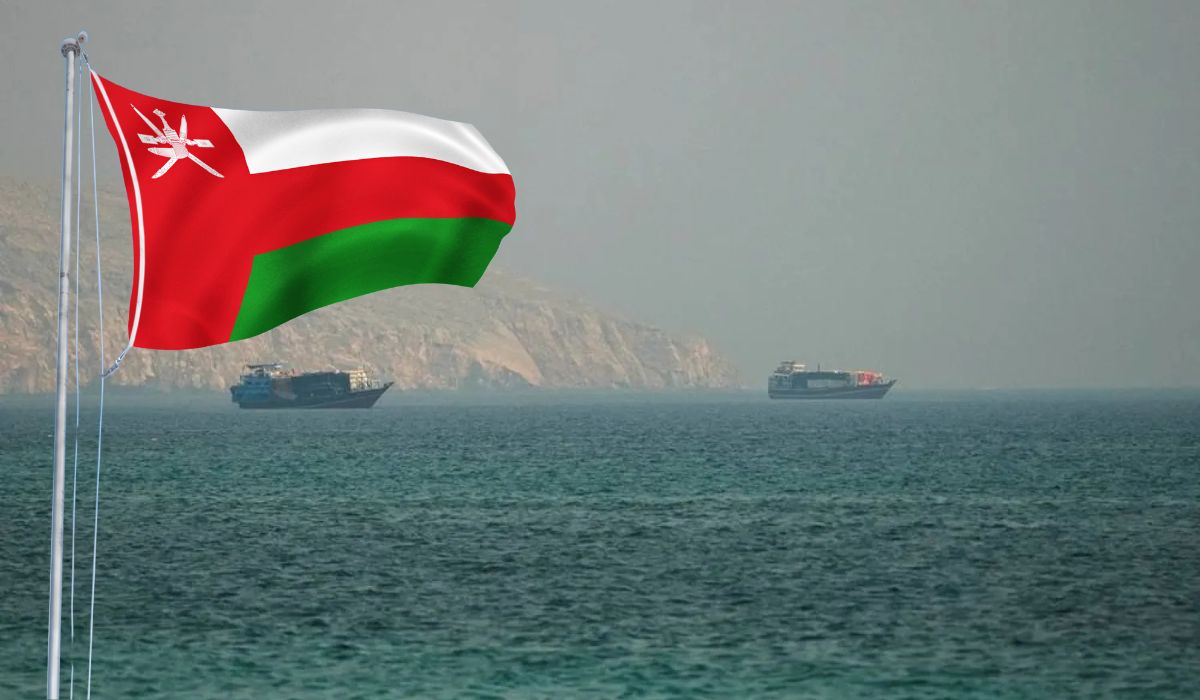
A security source reported that drone strikes targeted sites in Musandam Governorate, the peninsula that juts into the Strait of Hormuz, according to Oman's state news agency. The Sultanate condemned the attack and said it was taking all necessary measures to safeguard the country and its residents. Oman's News Agency did not specify where the drones had originated.
Separately, the UK Maritime Trade Operations authority reported an incident roughly nine nautical miles east of Oman, in which a container ship sustained damage to its rear, sparking an onboard fire. The crew abandoned the vessel into a lifeboat and were rescued by local authorities.
Iran's Islamic Revolutionary Guard Corps also claimed what it described as a surprise attack on logistics support facilities and refueling platforms used by US aircraft carriers at the Port of Duqm in Oman, according to Iranian state broadcaster IRIB. CNN reported it was unable to independently verify this claim and had reached out to CENTCOM for comment.
The broader US-Iran escalation this week
The Musandam strikes came just hours after CENTCOM announced it had completed a third round of strikes against Iran, hitting approximately 140 military targets using precision munitions launched from land- and sea-based fighter aircraft, drones, and naval vessels. Targets included Iranian missile and drone storage sites, naval capabilities, ammunition depots, communications networks, and coastal surveillance installations. Across all three rounds this week, CENTCOM said it has now struck more than 300 sites in total.
CENTCOM said this round was launched in direct response to an Iranian attack on the M/V GFS Galaxy, a Cyprus-flagged container ship transiting the Strait of Hormuz, which suffered an onboard fire and significant engine room damage, with one crew member reported missing.
In apparent retaliation, Iran's military reported strikes on US-linked military assets across the Gulf, including a Patriot air defense system, an ammunition depot, and a radar facility in Kuwait, a communications system and radar installation in Bahrain, and infrastructure at Jordan's Prince Hassan Air Base. CNN said it could not independently verify these Iranian claims. Qatar and Kuwait both reported intercepting aerial attacks early Sunday, and sirens sounded in Bahrain, home to the US Fifth Fleet, with officials directing residents to seek shelter.
Qatar's Ministry of Interior confirmed that three people, including one child, were injured by falling debris from interception operations in the country, adding that the injured were receiving necessary medical care.
Oman's difficult position: mediator and target
Oman has been repeatedly drawn into the conflict since late February 2026, despite having no direct role in the fighting and having served for months as the primary channel for indirect nuclear negotiations between Washington and Tehran. Earlier strikes this year hit the ports of Duqm and Salalah, along with oil tankers off the coast of Muscat and near the Port of Khasab. Cumulatively, attacks on Omani soil and waters tied to the conflict have killed at least 18 people and injured 23 others prior to Sunday's incidents, according to tracking of the conflict.
Even as it absorbs these strikes, Oman has continued its mediation efforts. Foreign Minister Badr al-Busaidi met his Iranian counterpart, Abbas Araghchi, in Muscat on Saturday specifically to discuss the safety and freedom of navigation through the Strait of Hormuz. According to a source familiar with the talks, Oman has drafted a tentative proposal for managing traffic through the strait via two separately controlled corridors: a Southern Corridor through Omani territorial waters permitting free navigation under pre-war conditions, and a Northern Corridor through Iranian waters requiring prior Iranian approval, though without tolls. The proposal has not yet been finalized.
Why the strait matters
The Strait of Hormuz is one of the world's most critical maritime chokepoints, historically carrying roughly a fifth of global oil supply. Despite the ongoing exchange of strikes, CENTCOM says that more than 800 commercial vessels and 400 million barrels of crude oil have successfully transited the strait since early May under the protection of US naval operations in the region.
What comes next
With mediation efforts continuing alongside active strikes, the coming days are likely to test whether diplomatic channels, particularly Oman's proposed dual-corridor arrangement, can gain traction faster than the conflict's cycle of retaliation. Pakistan, another key mediator in the US-Iran relationship, has also remained engaged: Iranian Foreign Minister Araghchi held a call with his Pakistani counterpart, Mohammad Ishaq Dar, on Sunday, with both sides agreeing to stay in close contact as the regional situation continues to evolve.











Saudi Arabia Intercepts Drone Near Shaybah Oil Field, Two Killed
Riyadh, October 22, 2026 : Saudi air defences intercepted a drone that attempted to target a facility at the Shaybah oil field, operated by...
- By Guest
- 22 Oct 2026