


 By Guest - August 11, 2026
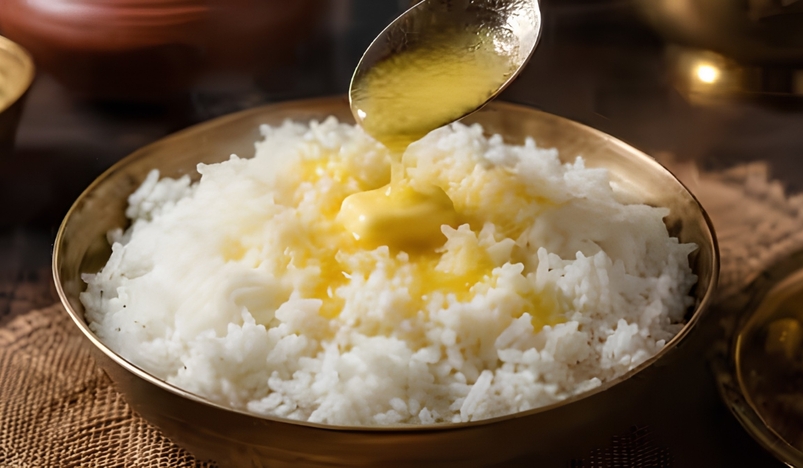
For generations, a spoonful of ghee melting over steaming hot rice has been a familiar sight in Indian homes. The combination appears in everyday meals across different regions, often alongside dal, vegetables, curd, pickles or spices.
Traditionally, ghee has been valued in Indian cooking for its rich flavour, aroma and culinary versatility. Modern food science also helps explain why pairing a source of fat with a carbohydrate-rich staple such as rice can change the characteristics of a meal.
Rice is primarily a source of carbohydrate. Depending on the variety and how it is processed and cooked, its effect on blood glucose can vary considerably. Studies have shown that rice variety, starch composition, cooking method, cooling and reheating can all influence its glycaemic response.
Adding fat to rice may alter starch digestion and the post-meal glucose response. Laboratory research examining rice prepared with ghee and other oils has found changes in slowly digestible and resistant starch under certain cooking conditions. However, researchers have also stressed that more human studies are needed before strong conclusions can be drawn specifically about ghee and rice.
Human studies looking more broadly at mixed rice meals support the idea that rice behaves differently when eaten with other foods rather than alone. Research has found that adding fat, protein and vegetables to white rice can reduce or delay the post-meal glucose response compared with eating white rice by itself.
Ghee also contributes fat-soluble nutrients, including vitamins A, D, E and K, although the amounts can vary. Dietary fat generally helps the body absorb fat-soluble vitamins from foods eaten as part of the same meal.
There is another simple reason the pairing has endured: taste. Ghee coats hot grains of rice, adding aroma, richness and a smooth texture. It can also make simple combinations such as rice and dal more satisfying and flavourful.
That does not mean that adding unlimited ghee automatically makes rice healthier. Ghee is calorie-dense and contains a high proportion of saturated fat. A randomised trial comparing diets rich in ghee with olive oil found higher apo B and non-HDL cholesterol with ghee, supporting recommendations to favour unsaturated fats for cardiovascular health.
For most people, the practical takeaway is moderation. A small amount of ghee can be enjoyed as part of a balanced meal containing rice, vegetables, pulses or other protein-rich foods. Portion size, overall diet quality and the type of rice can matter more than treating any single ingredient as a health remedy.
So while generations of Indians may have added ghee to hot rice primarily because of culture, flavour and tradition, modern research suggests that adding fat and other foods can indeed influence how a rice-based meal is digested. Science, however, does not support the idea that ghee alone transforms rice into a low-glycaemic or universally healthier food.
The takeaway
Ghee and hot rice is a deeply rooted Indian food tradition with a plausible nutritional basis for some of its effects, but moderation matters. For a more balanced plate, pair rice with vegetables, lentils or another protein source and use ghee in modest amounts.
Sources and evidence note
• PubMed: The Glycemic Potential of White and Red Rice Affected by Oil Type and Time of Addition (2015).
• PubMed: Effect of chicken, fat and vegetable on glycaemia and insulinaemia to a white rice-based meal in healthy adults (2014).
• PubMed: Effects of diets rich in ghee or olive oil on cardiometabolic risk factors in healthy adults (randomised crossover trial).
• Peer-reviewed review: Health benefits of ghee — Review of Ayurveda and modern science perspectives.

_20-08-2026_05-08.jpg)
_27-51-2026_11-51.png)
_27-43-2026_12-43.png)


.jpg)
.jpg)




.jpg)


.jpg)
.png)
.jpg)













Leave a comment