


 By neha - June 26, 2026
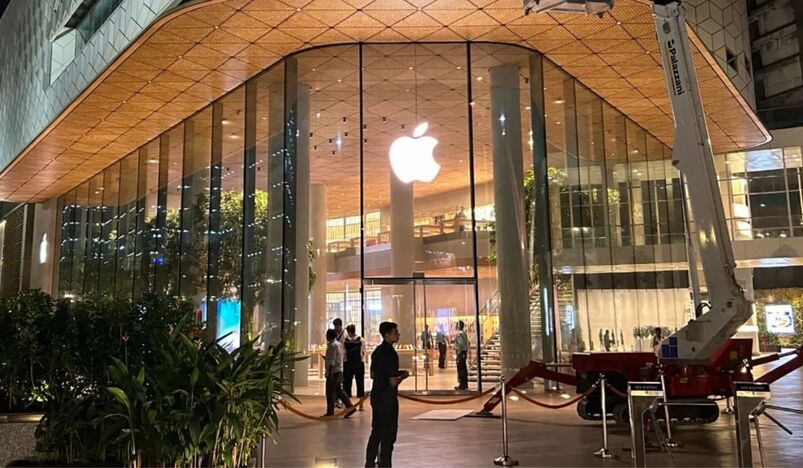
Apple just hit Indian buyers with its biggest price revision in years. MacBooks are up by ₹70,000 to ₹1 lakh. iPads have jumped by over 40 percent. The HomePod costs more. And the prices are already live on Apple's official Indian store.
If you are looking at your cart and wondering what happened — this blog has every answer.
How Much Did Apple Raise Prices?
The numbers are jarring. Here is exactly what changed:
- MacBook Pro 14-inch M5 (16GB) — went from ₹1,69,900 to ₹2,39,900 (a ₹70,000 jump)
- MacBook Pro M5 Max — increased by ₹1,00,000
- MacBook Air 13-inch M5 — rose from ₹1,19,900 to ₹1,49,900
- MacBook Air 15-inch M5 — jumped from ₹1,44,900 to ₹1,79,900
- MacBook Neo — went from ₹69,900 to ₹79,900
- iPad Air 13-inch (128GB) — saw a 41.22 percent price jump to ₹1,19,900
- iPad Pro — increased by as much as 42 percent
- HomePod and HomePod Mini — both revised upward
- Apple TV — also more expensive
One product line was left untouched. The iPhone. More on that shortly.
The Real Reason Behind the Price Hike
Apple publicly stated its reason. The company said in a statement: "The consumer electronics industry is facing an unprecedented challenge. The rapid expansion of AI data centres has created an extraordinary surge in demand for memory and storage. We have never seen a component price increase this much, this quickly."
That statement tells you the single biggest driver. Here is what it actually means.
AI Is Eating the World's Memory Supply
AI data centres consume enormous quantities of DRAM and NAND flash memory. Every large language model needs vast memory to train and run. Every AI company — from OpenAI to Google to Meta — is expanding its server infrastructure aggressively.
This creates a supply bottleneck. The same semiconductor factories that supply memory chips to consumer devices now have to fulfill massive orders from AI companies. The result is a shortage that pushes prices up across the entire industry.
This is not an Apple-specific problem. Other PC and tablet manufacturers are raising prices for exactly the same reason. Industry experts believe this upward trend will continue for at least two more years.
Apple Held Off as Long as It Could
Apple's outgoing CEO Tim Cook told The Wall Street Journal that price increases are "unavoidable right now." He added that Apple had been doing its best to absorb the cost increases but could no longer do so.
Apple confirmed it had used existing inventory to protect margins through earlier quarters. That buffer has now run out. The company passed the cost directly to customers.
Tarun Pathak, research director at Counterpoint Research, explained it clearly. "Apple held it off for at least two quarters, protecting its user base from price inflation. It has reached the point where it could no longer absorb the cost increase," he said.
Why India Gets Hit Harder Than Other Markets
This is the part most people do not fully understand. The global memory shortage affects every market. But Indian buyers pay more than almost anyone else in the world.
A MacBook Pro that rose by roughly $300 in the United States has risen by ₹50,000 to ₹70,000 in India. Exchange rate arithmetic alone does not explain that gap.
Three structural reasons make India uniquely vulnerable to Apple price hikes.
1. Import Duties on Finished Products
India charges import duties on electronics that are not manufactured locally. Mac and iPad models are still largely imported into India. These duties add directly to the final price tag.
Macs and iPads do not yet benefit from local manufacturing advantages the way the iPhone does. The iPhone is now assembled in India through Foxconn and Tata Electronics. That local manufacturing allows Apple to avoid certain import-related costs on iPhones. Mac and iPad do not have that protection yet.
2. GST at 18 Percent
Every Apple product sold in India carries an 18 percent Goods and Services Tax. This tax applies after import duties and distributor margins are already added. The structure means taxes compound on top of taxes.
When global component costs rise, the 18 percent GST applies to that higher base price. Indian buyers effectively pay tax on the component cost increase too — not just the product price.
3. Apple's Market-Specific Pricing Strategy
Apple has historically priced India as a premium-tolerant market. Indian buyers currently pay an estimated 25 to 30 percent more than American consumers for equivalent Apple hardware. That gap exists even after accounting for import duties and GST.
When global costs rise, Apple applies its market-specific pricing multiplier. The result is price increases in India that are steeper in percentage terms than in the US or Europe.
Why the iPhone Was Not Affected
Apple kept iPhone pricing unchanged — at least for now. The reason is partly commercial and partly structural.
Commercially, the iPhone is Apple's most important product. It sits at the center of Apple's hardware business, services ecosystem, and carrier relationships worldwide. Raising iPhone prices too aggressively could damage demand in ways that Apple cannot easily recover from.
Structurally, the iPhone has more pricing flexibility. Carrier subsidies, trade-in programs, financing options, and the Apple Card Monthly Installment plan all let Apple manage cost pressure without changing the official sticker price.
In India specifically, the iPhone benefits from local assembly through Foxconn and Tata. That reduces India's import duty exposure on iPhones compared to Macs and iPads.
However, analysts do not expect iPhone prices to stay untouched for long. Counterpoint Research's analyst Singh expects Apple to revise iPhone prices within weeks. He pointed to constrained supply for iPhone 15, 16, and 17 series in India over the past few weeks as an early indicator.
The Gray Market Opportunity This Creates
Every time Apple raises Indian prices significantly above global levels, the gray market grows. Products carried from Dubai or the US — even with customs risk — can undercut official Indian prices substantially.
A MacBook Pro that now costs ₹70,000 more in India than it did last month creates a powerful gray-market arbitrage opportunity. Indian buyers have noticed this for years. This hike makes the gap wider than ever.
What This Means for Indian Buyers Right Now
If you were planning to buy a Mac or iPad, you face a real decision. Here is a practical breakdown.
Buy now if: You need the device immediately for work or study. Prices are unlikely to drop in the short term. Industry experts widely expect another round of increases.
Wait if: You can delay by three to six months. If Apple's memory supply chain stabilizes — which analysts do not currently expect before late 2027 — prices could soften. A potential iPhone price revision in September at the iPhone 18 launch cycle may also trigger broader promotional activity.
Consider alternatives if: The new prices push Apple products out of your budget. Windows laptops and Android tablets at similar performance tiers now offer genuinely competitive value. Samsung, Lenovo, and ASUS have not yet implemented equivalent percentage increases.
Check refurbished options: Apple's official refurbished store in India offers certified devices at reduced prices. Third-party refurbished sellers also benefit when new prices spike — demand for their inventory increases.
Is This a Permanent Change?
Almost certainly yes, in the medium term. The AI infrastructure boom shows no sign of slowing. Memory makers are shifting manufacturing capacity toward high-bandwidth memory chips for AI workloads. That directly reduces the supply available for consumer electronics.
Ram, an analyst quoted by Business Standard, put it bluntly. "With the macro environment for the second half of 2026 and beyond remaining challenging, broad-based price increases across the industry look less like a risk and more like a certainty."
Apple's own gross margins have consistently hovered near 46 percent — among the highest in consumer electronics. The company has historically had the cushion to absorb some cost pressures. The fact that it chose not to absorb these increases signals how significant this memory cost surge truly is.
The Bigger Picture for Apple in India
Apple has spent three years building its India story. It opened flagship stores in Mumbai and Delhi. It expanded manufacturing through Foxconn and Tata. It positioned India as its next major growth market after China.
A 42 percent price hike on iPads runs directly against that narrative. India's aspirational middle class — the demographic Apple has been courting — is highly price-sensitive. The MacBook Air, Apple's gateway Mac for college students and first-job professionals, is now meaningfully more expensive.
The strategic contradiction is real. Apple wants India's volume. But its pricing decisions signal that it currently treats India as a margin opportunity rather than a volume market.
Until Mac and iPad assembly scales up in India — reducing import duty exposure — Indian buyers will continue absorbing the full weight of global supply chain shocks. The iPhone's local manufacturing advantage shows exactly what is possible when Apple commits to in-country production. Mac and iPad buyers are still waiting for that same protection.
Key Takeaways
- Apple raised MacBook prices by 20–36% and iPad prices by up to 42% in India.
- The MacBook Pro M5 Max jumped by ₹1,00,000. The MacBook Pro 14-inch M5 rose by ₹70,000.
- The cause is a global AI-driven shortage of DRAM and NAND flash memory chips.
- India pays more than most markets due to import duties, 18% GST, and market-specific pricing.
- Mac and iPad products are largely still imported, unlike iPhones assembled locally.
- iPhone prices are unchanged for now — but analysts expect a revision within weeks.
- The price increases are unlikely to reverse for at least two years, per industry analysts.
- Gray-market alternatives and Apple's official refurbished store are now more relevant than ever.

_20-08-2026_05-08.jpg)
_27-51-2026_11-51.png)
_27-43-2026_12-43.png)



.jpg)
.jpg)




.jpg)


.jpg)
.png)
.jpg)













Leave a comment