


 By neha - June 25, 2026
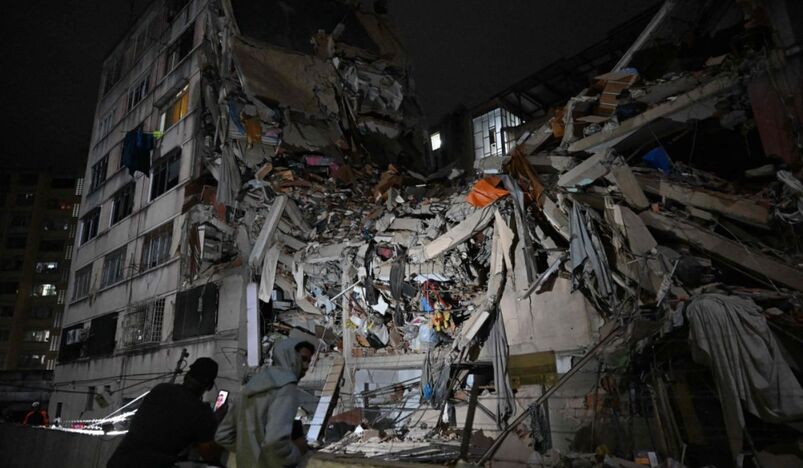
Two massive earthquakes struck Venezuela within 40 seconds of each other on Wednesday evening. They brought down buildings, buried people in rubble, shut the country's main airport, and triggered a state of emergency across one of South America's most fragile nations.
The US Geological Survey confirmed the first quake hit at magnitude 7.2. The second, even stronger at 7.5, followed just 39 seconds later. Together they rank among the most powerful tremors to strike Venezuela in over a century — and the destruction they left behind is still being measured.
"High casualties and extensive damage are probable," the USGS warned in an official assessment. "The disaster is likely widespread."
What Happened on the Night of June 24
The first quake struck just after 6 p.m. local time. Its epicenter sat near San Felipe, the capital of Yaracuy state, about 160 kilometres west of Caracas. The second quake followed immediately near the town of Yumare — also in Yaracuy state — generating a shockwave that hit Caracas with full force.
The timing made it worse. It was a public holiday in Venezuela. Millions of people were at home celebrating a day marking an 1821 military victory that helped secure independence from Spain. Families, elderly residents, and children were inside when the buildings began to shake.
Screams echoed through shopping centres. People poured into the streets. Dust columns rose above at least two Caracas neighbourhoods. Emergency vehicles moved through the capital as rescue teams climbed through the wreckage of collapsed structures.
"As soon as it started, we began hearing people screaming," said Astrid Ramirez, a 41-year-old publicist in western Caracas. "Everyone was running down the stairs."
The USGS Issued Two Separate Red Alerts
The US Geological Survey's PAGER system — its rapid damage assessment tool — issued two separate red alerts for the back-to-back quakes. The USGS only issues such alerts once or twice per year globally. Each alert independently projected a 44 percent probability of a death toll ranging from 10,000 to 100,000 people.
Seismologist Lucy Jones, a visiting professor at the California Institute of Technology, called the event one of the most dangerous types of quakes possible.
"This is one of the really great, very difficult, very damaging earthquakes," she said in a video briefing. "You combined a very large event with residences of a lot of people."
The USGS classified the event as a "doublet" — a rare seismic sequence in which a powerful foreshock precedes a larger mainshock by only seconds. The 7.2 foreshock arrived first. The 7.5 mainshock followed 39 seconds later from a point 45 kilometres away.
Buildings Fell. A Coastal Hotel Collapsed. An Airport Was Destroyed.
In Caracas, the Altamira and Los Palos Grandes neighbourhoods took the most severe hits. One AFP journalist watched a 22-story building collapse completely. People cried out relatives' names. Volunteers climbed over concrete and debris shouting for lights and tools.
Eighteen survivors were pulled from one Caracas building alone, according to Mayor Gustavo Duque of the Chacao municipality. He urged residents to move to public plazas and remain outdoors to avoid aftershock risks.
Dozens of buildings suffered significant facade damage across the capital. Many were older structures — built in the 1950s and 1960s during an era of rapid urbanisation — now far more vulnerable to ground shaking than modern construction.
In Caracas's Hospital de Clinicas, staff doubled their night shift. A video from inside the building showed ceiling panels hanging loose, plaster scattered across darkened corridors, and medical staff navigating the damage on foot.
La Guaira, a coastal state north of Caracas, suffered some of the worst destruction outside the capital. Up to 15 buildings collapsed there, according to Jorge Rodriguez, president of Venezuela's national assembly. The Hotel Eduard in the coastal city of Macuto — an eight-floor, 106-room waterfront property — was reduced almost entirely to rubble. Only the hotel's entrance remained standing in verified video footage.
Simon Bolivar International Airport, located in La Guaira and serving Caracas, shut down due to what acting President Delcy Rodriguez described as "serious damage." Videos showed panicked passengers running through rubble and debris inside the terminal.
A Tsunami Warning Was Issued and Then Lifted
The US Tsunami Warning System issued a threat for Puerto Rico, the US Virgin Islands, and the British Virgin Islands immediately after the quakes. It warned of potential hazardous waves for Aruba, Curacao, and Bonaire as well — all island territories within 300 kilometres of the epicenter.
The warning was withdrawn approximately one hour later.
Colombia's national disaster management agency, UNGRD, independently confirmed there was no tsunami threat to its coastline. Freddy Tovar, coordinator of Colombia's National Seismological Network, said his agency had received more than 200 tremor reports nationwide and warned that aftershocks could continue to be felt across the country.
The State of Emergency and What It Covers
Acting President Delcy Rodriguez addressed Venezuela from the capital in the hours after the quakes. She confirmed fatalities but did not release a number. She confirmed 20 aftershocks followed the main seismic sequence. She announced the airport closure and suspended all Metro and rail services across Caracas.
Dozens of schools and community spaces were cancelled through Monday across several Caracas municipalities. Gas supplies were cut to multiple damaged buildings as a precaution. Interior Minister Diosdado Cabello called on residents to leave damaged structures and asked motorists to clear the roads for ambulances and rescue vehicles.
"We have some damaged structures and we don't want any kind of accident involving gas to occur," Cabello said.
The worst-affected states, Cabello confirmed, were Trujillo, Carabobo, Miranda and La Guaira. Hundreds of emergency workers deployed across all of them.
In Falcon state, west of Caracas, 22 people were confirmed injured. Fifteen adults remained unaccounted for as rescue teams continued searching through debris.
The United States Offered Help
US President Donald Trump posted on social media that the United States stood ready to assist. "I have instructed all agencies of our government to get ready to move quickly," he wrote.
US Deputy Secretary of State Chris Landau confirmed the country was already mobilising assistance. The US embassy in Caracas issued a statement urging American citizens in Venezuela to seek secure shelter and stay away from damaged areas.
The offer of American aid carries political weight. Interim President Delcy Rodriguez has led Venezuela since the US-backed ouster of President Nicolás Maduro earlier in 2026. Rodriguez has actively built diplomatic and economic ties with Washington since taking power. She has described the post-Maduro era as a new chapter of international cooperation — particularly on oil and mining.
That relationship now faces its first major crisis test.
Venezuela Sits on One of the World's Most Active Fault Lines
The earthquakes did not happen by chance in this region. Venezuela sits in one of the most seismically dangerous zones in South America. The Caribbean Plate and the South American Plate collide along a complex boundary known as the Boconó-Morón-El Pilar Fault System.
This fault runs 1,300 kilometres along northern Venezuela. It moves as a right-lateral strike-slip fault — where tectonic plates grind sideways past each other rather than subducting. That type of movement produces shallow, highly destructive earthquakes close to the surface. Both June 24 quakes struck at relatively shallow depths of 22 and 10 kilometres respectively. Shallow quakes cause more surface damage than deep ones.
Historical records underline the danger. An estimated 30,000 people died when earthquakes destroyed Mérida and Caracas in 1812. A magnitude 6.5 quake killed 236 people in Caracas in 1967. A 1997 earthquake in Venezuela's northeast killed 73 people.
Maria Romero, an 80-year-old Caracas pensioner who survived the 1967 quake, told reporters that Wednesday's event surpassed everything she had experienced.
"This earthquake was horrible, even worse than the one in 1967," she said.
Eyewitnesses Describe the Moment the Ground Moved
The accounts of those who lived through the quake paint a picture of ordinary moments shattered without warning.
Odalis Escalona, a 54-year-old bank employee in Caracas, described what happened in her building. "The stairs came away, the whole wall cracked. Things fell from the ceiling. It was horrible," she said.
Carmen Guedez, 69, was in the same room as her bedridden sister when the first tremors hit. "It kept getting stronger," she said. "I started to see the windows begin to move and then everything shook." She and her sister were unable to flee. Their neighbours sheltered in the street.
A 41-year-old office worker, who did not give her name, described receiving a phone alert a split second before the shaking escalated. "As I picked it up and started listening to what it was saying, I first felt light shaking," she said. "Then, in less than two seconds, everything started moving."
What Happens Next
Rescue operations remained active across multiple states as of early Thursday morning. Search teams were still pulling survivors from collapsed structures in Caracas and La Guaira.
The USGS continued monitoring for additional aftershocks. Seismologists warned that aftershocks from a 7.5 magnitude event can remain strong enough to bring down already-damaged structures. Residents in affected areas were urged to remain outdoors or in open spaces.
Venezuela's media environment — ranked 159th out of 180 countries in the Reporters Without Borders press freedom index — makes independent damage verification difficult. The government controls most broadcast channels and more than 200 websites remain blocked. The full scale of the disaster may take days to fully emerge.
What is already clear is that Wednesday's twin quakes rank among the most serious natural disasters to strike Venezuela in living memory. A country already weakened by years of economic collapse, political turmoil, and infrastructure decay now faces a recovery challenge of enormous scale.
Key Facts at a Glance
- First quake magnitude: 7.2 at 22:04 UTC near San Felipe, Yaracuy state
- Second quake magnitude: 7.5, 39 seconds later near Yumare, Yaracuy state
- Depth of quakes: 22 km and 10 km respectively
- Aftershocks recorded: at least 20 confirmed
- USGS alert level: Red — the highest possible
- Projected casualty range by USGS: 10,000 to 100,000
- Hotel Eduard in Macuto: 8 floors, 106 rooms, almost entirely collapsed
- La Guaira buildings collapsed: up to 15 confirmed
- Simon Bolivar International Airport: closed due to serious structural damage
- Tsunami warning: issued for Puerto Rico and Virgin Islands, later withdrawn
- Countries where tremors felt: Venezuela, Colombia (200+ reports), Japan
- US response: search-and-rescue teams being mobilised; Trump pledged aid
- Hardest-hit states: La Guaira, Trujillo, Carabobo, Miranda, Falcón

_20-08-2026_05-08.jpg)
_27-51-2026_11-51.png)
_27-43-2026_12-43.png)



.jpg)
.jpg)

.jpg)


.jpg)
.png)
.jpg)






Leave a comment