


 By Guest - August 12, 2026
A landmark ruling from Damascus
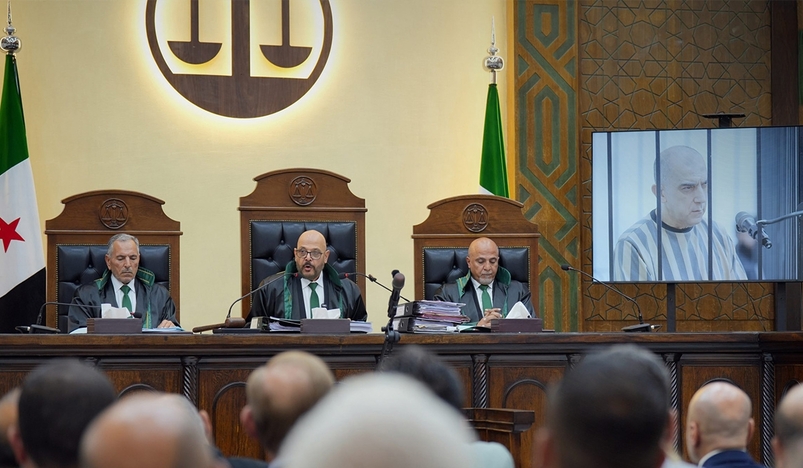
Syria’s Fourth Criminal Court in Damascus has sentenced former president Bashar al-Assad to death in absentia after finding him guilty of a series of offences linked to the violent repression that defined the country’s nearly 14-year conflict. The judgment, delivered on 11 August, is the first formal conviction of Assad by a Syrian court since his government was toppled in December 2024.
Syrian state media said the court convicted Assad of intentional murder, including the killing of children under 15, killings accompanied by torture and brutality, and repeated incitement to murder. The court classified the conduct as crimes against humanity and war crimes. Reuters and the Associated Press separately reported that the judgment also encompassed torture, arbitrary detention and other abuses.
The sentence was handed down with Assad outside Syria. He fled to Russia after opposition forces entered Damascus in 2024, and Moscow granted him asylum. His location means the verdict is immediately significant as a judicial and political statement, while its practical enforcement depends on arrest, extradition or his eventual return to Syrian jurisdiction.
Who else was sentenced
Assad’s brother Maher al-Assad, the former commander of the elite Fourth Division, was among six additional fugitives sentenced to death. Syrian state media identified the others as former defence minister Fahd al-Freij, Louay al-Ali, Qusay Mayhoub, Wafiq al-Nasser and Talal al-Aysami. The court said their convictions included intentional murder, torture resulting in death, unlawful deprivation of liberty and abduction.
Atef Najib, Assad’s cousin and a former security chief in Daraa, was also sentenced to death. Unlike the fugitives, Najib was in custody and present for the proceedings. His role carries particular resonance: the detention and torture of schoolboys in Daraa in 2011 helped ignite protests that spread nationwide and developed into war.
What the in-absentia verdict means
KEY POINT The ruling establishes a Syrian criminal judgment against Assad, but it does not itself place him in custody. Any execution of the sentence would require Syria to secure jurisdiction over him and follow the applicable review and enforcement procedures.
Trials in absentia can provide a public record and legal recognition of victims’ claims, particularly when an accused person is beyond a court’s reach. They also raise due-process questions because the defendant is not present to instruct counsel, test evidence directly or answer the case in person. The quality of the evidence, the independence of the judiciary and the availability of review will therefore shape how the verdict is judged internationally.
Rights advocates have welcomed movement toward accountability while cautioning that transitional justice must be credible, transparent and even-handed. AP reported concerns from monitors about the speed of proceedings and the adequacy of legal representation. Those concerns do not erase the gravity of the allegations; they underline the importance of procedures capable of withstanding close scrutiny.
A test for Syria’s transitional justice
For many Syrians, the verdict represents overdue recognition after years of detention, disappearance, torture, bombardment and displacement. Celebrations were reported in Damascus and Daraa, where families displayed photographs of people killed or missing under the former government. The emotional response reflects the scale of unresolved loss and the demand for official acknowledgment.
Yet a durable accountability process will require more than headline convictions. Investigators must preserve documents and mass-grave evidence, identify chains of command, protect witnesses and clarify the fate of the disappeared. Courts will need to distinguish individual criminal responsibility from collective blame, especially in a country still vulnerable to communal violence and retaliation.
The death penalty adds another layer of controversy. Some legal and human-rights groups oppose capital punishment in all circumstances and argue that life imprisonment, after a demonstrably fair trial, better preserves the possibility of review and avoids turning accountability into retribution. Others see the court’s sentence as proportionate to the scale of the crimes found proven. The debate is likely to continue as Syria attempts to rebuild public trust in its institutions.
What happens next
The immediate next steps are legal and diplomatic. Syrian authorities may pursue international cooperation and arrest notices, but Russia’s asylum decision makes extradition unlikely without a major political shift. Proceedings involving defendants already in custody will receive particular attention because they offer the clearest test of courtroom standards, defence rights and evidence handling.
The judgment does not settle the broader record of Syria’s war, nor does it replace international investigations or cases in foreign courts using universal jurisdiction. It does, however, mark a sharp break from decades in which the Assad family stood beyond the reach of Syria’s own judiciary. Whether that break becomes the foundation of impartial justice will depend on what follows the verdict.

_23-06-2026_05-06.jpg)
_23-57-2026_10-57.jpg)


_20-08-2026_05-08.jpg)
_27-51-2026_11-51.png)
_27-43-2026_12-43.png)



.jpg)
.jpg)




.jpg)


.jpg)
.png)
.jpg)













Leave a comment