


 By neha - June 23, 2026
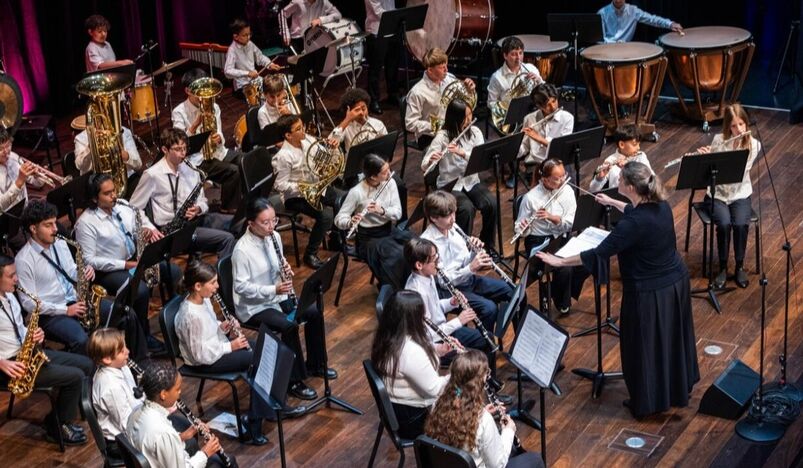
Doha: Qatar's Qatar Music Academy has achieved something no institution in the Gulf has done before. It has earned accreditation from MusiQuE, the world's leading independent quality body for music education. The award places QMA in the same elite category as conservatoires and music schools that have existed for centuries.
The accreditation makes QMA the first institution in the entire Gulf region to receive this recognition. It is a milestone that goes far beyond a certificate on a wall. It signals that Qatar has built a music education institution capable of competing with the best in the world.
What MusiQuE Accreditation Actually Means
MusiQuE stands for Music Quality Enhancement. It is an independent European accreditation body established in 2014. It dedicates itself exclusively to setting and evaluating global standards in music education. No other accreditation body in the world focuses specifically on music at this level.
MusiQuE is registered on the European Quality Assurance Register for Higher Education (EQAR). It operates under the standards of the European Higher Education Area. Its review panels consist of independent, internationally recognised peers from across the music education world. An institution cannot simply apply and receive accreditation. It must undergo a rigorous self-evaluation process, submit a detailed report, host a site visit from an international panel and demonstrate that it genuinely meets internationally agreed standards across every dimension of its operation.
MusiQuE accredits institutions across Europe and beyond. The institutions it has recognised include some of the oldest and most prestigious music schools on earth. QMA now sits among them.
Seven Years in the Making
This achievement did not happen overnight. Dr. Ozgur Mert Esen, Head of Western Music at QMA, described the accreditation as the culmination of a seven-year journey. That journey required QMA to demonstrate, rigorously and systematically, how its education model met international standards.
Dr. Esen was direct about what this means. The model QMA built for Qatar, he said, is not only locally meaningful but internationally credible. Those two things, local meaning and international credibility, are harder to achieve together than separately. Many institutions do one or the other. QMA has now proven it can do both.
"This milestone affirms Qatar's capacity to build specialised cultural institutions rooted in local identity, strengthened by academic rigour, and recognised by international standards," Dr. Esen said.
What Makes QMA Different From Other Music Schools
QMA opened its doors at Katara Cultural Village in Doha in January 2011. Qatar Foundation established it as part of its Pre-University Education portfolio. From day one, QMA had a mission that set it apart from almost any other music institution in the world.
Most elite music schools teach either Western classical music or a regional tradition. QMA does both simultaneously and treats both with equal seriousness. Its two departments, Western Music and Arab Music, operate as parallel centres of excellence within a single academy.
The Arab Music Department offers instruction in oud, qanun, nai, Arab violin (kaman) and Arab percussion. Students learn maqam theory, improvisation and classical Arab repertoire through dedicated ensemble programmes including Takht ensembles at junior, middle and master levels, as well as a Qatari Women's Ensemble, Arab string ensembles and Arab percussion groups.
The Western Music Department delivers instruction across all orchestral instruments, piano and voice. Students participate in orchestras, chamber ensembles and choirs. The Qatar Youth Orchestra is one of the flagship performing ensembles that emerge from the academy's training.
Both departments offer Academic Music programmes for serious pre-college students aged 6 to 18, as well as non-academic Music for All programmes for students who want to learn an instrument without pursuing formal credentials. A Music Appreciation programme serves children aged 4 to 5.
The academy serves approximately 600 students at any given time. Its faculty are internationally recruited specialists. The institution has also built partnerships with the Qatar Philharmonic Orchestra, the Reina Sofia Music School in Madrid, international embassies and Qatar Foundation schools across the country.
The Dual Identity That MusiQuE Recognised
Dr. Esen called the international recognition of QMA's dual musical identity one of the most historically significant dimensions of this achievement.
"QMA brings together Arab and Western music traditions within one education framework," he said. "This is not a decorative feature. It is one of our defining strengths."
He stressed that QMA has developed professional educational models in both traditions. Students can study, perform, progress and be assessed within structured programmes that respect the integrity of each musical language. Arab music is not an add-on. Western music is not the dominant framework. Both exist as fully developed, academically rigorous programmes within one institution.
Dr. Esen said the recognition makes QMA a regional reference point for pre-college music education. It also places Qatar at the forefront of an emerging regional conversation about the future of professional music education, cultural heritage and artistic excellence.
His framing of the achievement was ambitious but grounded. "For Qatar, and the region, it demonstrates that Arab musical heritage can be protected, transmitted, developed and internationally recognised," he said. "It also confirms that cultural authenticity and international standards are not opposing forces. When carefully designed, they can strengthen one another."
What It Means for Students and Faculty
Taoufik Mirkhan, Head of Arab Music at QMA, described the accreditation as a particular milestone for the Arab Music Department. He has been part of QMA since its founding year in 2011 and has helped shape the department's identity and programmes over more than a decade.
For students, the accreditation delivers a concrete benefit. It provides international recognition of their academic achievements. It opens broader opportunities for pursuing further education and professional careers on a global scale. Critically, it does this without requiring students to abandon their Arab musical identity. The accreditation recognises that identity as a legitimate and valued part of the international music education landscape.
For faculty, the accreditation strengthens a culture of quality assurance and continuous professional development. It also supports the exchange of expertise with international peers within a framework guided by globally recognised standards.
A Broader Education System That Goes Beyond Conventional Instruction
Dr. Esen was particularly candid about what QMA has had to do that most music schools never face. QMA serves a uniquely diverse community. Its students come from different cultural backgrounds, different educational systems and different levels of musical experience. They have different learning needs and different artistic ambitions.
That diversity has forced QMA to move beyond conventional approaches to music instruction. The academy has developed responsive pathways for beginners, developing musicians, serious pre-college students, advanced performers and learners pursuing music as part of their wider personal and cultural formation.
This breadth, Dr. Esen argued, has made QMA not just a provider of music education but an expert institution in developing, adapting and applying educational models that are distinctive, progressive and effective.
MusiQuE's standards evaluate exactly this kind of institutional quality. They assess governance, educational goals, learning outcomes, faculty qualifications, resources, student wellbeing and quality culture. An institution that earns MusiQuE accreditation has demonstrated strength across all of these dimensions, not just in the quality of its teaching in any single area.
What This Means for Qatar and the Region
Qatar's cultural ambitions have been well documented. The country has invested heavily in museums, cultural institutions and the arts. Katara Cultural Village, where QMA is based, was built as a hub for cultural activity in Doha. Qatar Foundation has consistently framed its investment in education and culture as central to Qatar National Vision 2030.
The MusiQuE accreditation connects those ambitions to an internationally verified outcome. Qatar now has a music education institution that experts from across the global music world have assessed and endorsed. That is not a claim QMA makes about itself. It is a verdict delivered by an independent body that holds institutions to the same rigorous standards regardless of where they are located.
For young musicians across Qatar and the wider Gulf, this creates something genuinely valuable. There is now a world-class music education institution in the region. Students who train here and earn recognised qualifications can present those credentials anywhere in the world. That was not true before June 23, 2026. It is true now.
.jpg)

_03-27-2026_08-27.jpg)
.jpg)
.jpg)
.jpg)


.jpg)
.jpg)



.jpg)

.jpg)
.png)
.jpg)













Leave a comment