


 By neha - July 03, 2026
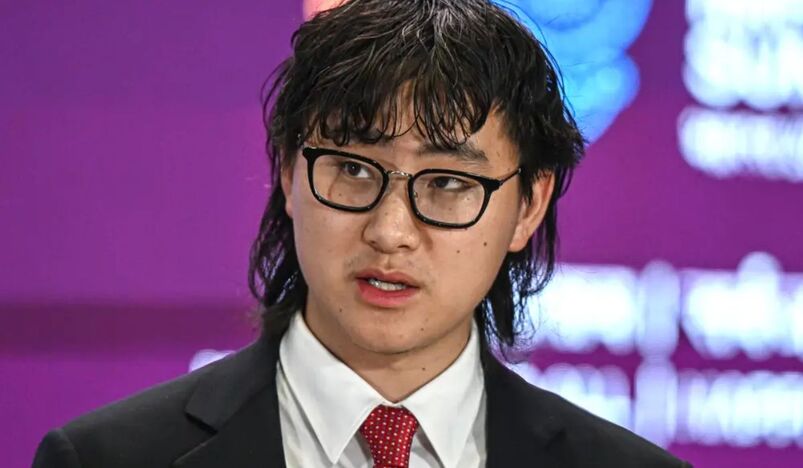
Meta's superintelligence chief just made a bold claim about the company's next A I model.
Alexandr Wang told employees at an internal town hall that Meta's upcoming model has caught up with OpenAI's flagship system. The model carries the internal codename Watermelon. Wang said it now matches GPT-5.5 on closely watched AI benchmarks.
Two people familiar with the meeting confirmed his comments. It's still unclear which benchmarks Wang cited.
What Wang actually said
Wang described Watermelon as the direct successor to Avocado, Meta's internal name for Muse Spark. Meta released Muse Spark back in April as its first major model since hiring Wang from Scale AI.
"Watermelon, our next model after Avocado, is currently in training," Wang said, according to a person who attended the meeting. He added that Watermelon uses an order of magnitude more compute than its predecessor did.
That's a significant jump. Muse Spark performed well on select benchmarks when it launched. Even so, it still fell short of leading models from OpenAI, Google, and Anthropic. Wang's comment suggests Meta is now leaning almost entirely on raw compute to close that gap.
Why this claim matters, and why it's still shaky
Meta has poured enormous resources into catching up with rival labs. The company told investors it expects to spend between $125 billion and $145 billion this year on chips, data centers, and other AI infrastructure. That figure sits well above its earlier forecast.
Wang also oversees a team of elite researchers Meta recruited with massive pay packages, some reportedly worth hundreds of millions of dollars. Zuckerberg personally oversees the company's AI push and renamed the division Meta Superintelligence Labs after bringing Wang on board.
Despite all that spending, a town hall statement isn't a verified result. Wang's claim rests on a single internal comment, relayed by unnamed sources, with no published benchmark data attached. Neither Meta nor OpenAI has confirmed specifics publicly. Independent researchers can't test a model that hasn't shipped yet.
That gap between internal claims and public proof matters here. Meta made similar confident statements before Muse Spark launched, and the finished model still trailed competitors overall.
The timing complicates the story
Wang's upbeat comments landed the same day Zuckerberg struck a noticeably more cautious tone in the same town hall. Zuckerberg reportedly told staff that Meta's AI agent development hasn't accelerated the way the company expected over the past four months. He also acknowledged the company's recent AI reorganization wasn't as clean as it could have been.
Those comments came alongside news of thousands of layoffs at Meta. So the town hall delivered a mixed message: real optimism about Watermelon's raw performance, paired with a more sober admission that the harder problem, building AI agents that actually work well, isn't moving as fast as leadership hoped.
Wang also posted publicly on social media the same day, teasing an update to Muse Spark with stronger coding and agent capabilities. Asked when Meta would ship a coding model competitive with Anthropic's Claude Opus, he said it would happen "pretty soon."
What to watch next
Nothing here is final until Meta actually releases Watermelon and publishes real benchmark numbers. Treat Wang's comments as an early signal, not a verified milestone. The AI industry has seen plenty of internal claims that didn't hold up once outside researchers got access to a model.
If Watermelon does deliver GPT-5.5-level performance, it would mark Meta's clearest progress yet in the race against OpenAI, Google, and Anthropic. If it doesn't, it becomes another example of a confident internal preview that didn't translate into a competitive public release.
For now, the honest takeaway is simple. Meta says it has closed the gap. The rest of the industry can't check that yet.

_20-08-2026_05-08.jpg)
_27-51-2026_11-51.png)
_27-43-2026_12-43.png)



.jpg)
.jpg)




.jpg)


.jpg)
.png)
.jpg)












Leave a comment