


 By A Robin - February 03, 2026
.png)
As artificial intelligence systems rapidly advance toward capabilities that may rival or exceed human intelligence, a fundamental question is moving from theory to urgency: is humanity ready for what comes next?
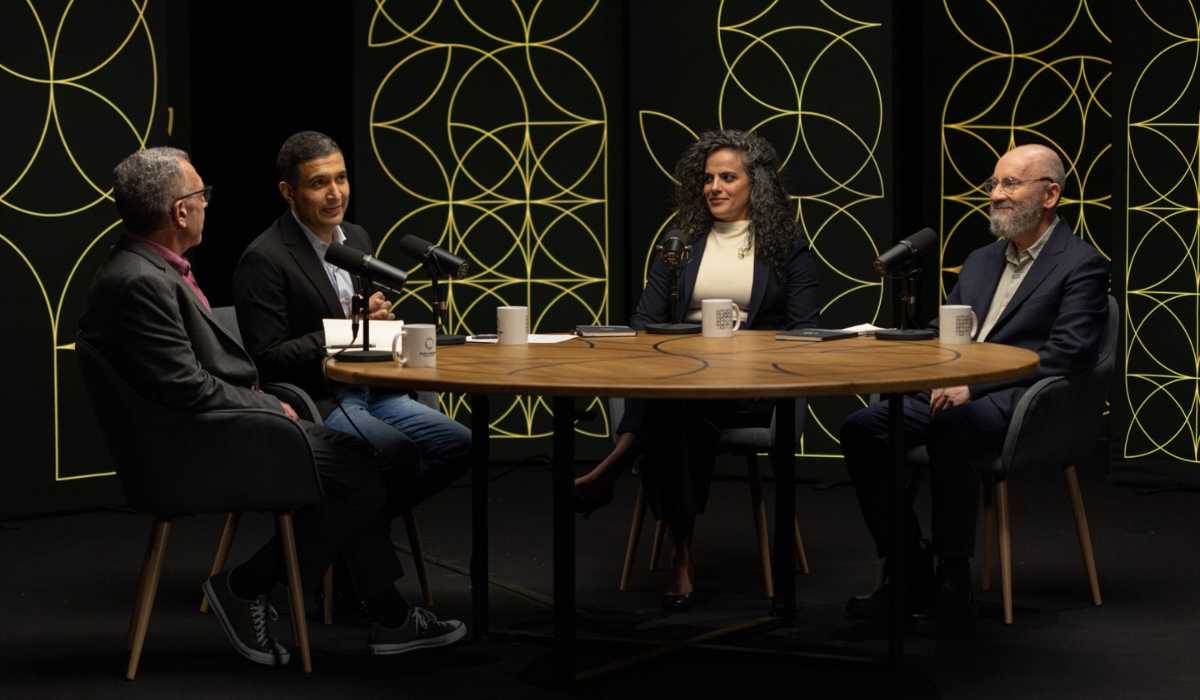
In its latest town hall, Qatar Foundation’s Doha Debates convened students, scholars and global experts to examine the ethical, political and social consequences of an intelligence explosion––an era in which intelligence becomes powerful, scalable and potentially uncontrollable.
Held at Multaqa, Education City Student Center, the discussion explored whether existing institutions, moral frameworks and governance systems are equipped to keep pace with accelerating technological change.
Moderated by Nadir Nahdi, the town hall featured Max More, strategic philosopher and transhumanist thinker; Dr. Roman Yampolskiy, professor of computer science and a leading voice on AI safety and control; and Nabiha Syed, executive director of the Mozilla Foundation and advocate for equitable, human-centered technology governance.
Approaching the issue from sharply different perspectives, the speakers debated whether advanced AI represents an unprecedented opportunity for human flourishing or a risk that fundamentally challenges human agency itself.
Reflecting a proactionary view, Max More argued that humanity should resist fear-driven paralysis, emphasizing the importance of innovation guided by reason and proportional safeguards, noting that “there is existential risk on one side, but there is also existential opportunity.”
Taking a more cautionary stance, Dr. Roman Yampolskiy questioned whether meaningful control is possible once systems surpass human intelligence, warning that governance frameworks may fail when intelligence becomes asymmetric. “We are creating something smarter than us, more capable, and we are not fearful enough,” he said.
From a societal lens, Nabiha Syed focused on how decisions about AI are made, who benefits and who bears the costs when technologies are deployed unevenly across societies, underscoring the need for accountability, transparency and public participation. She cautioned that “we are approaching this moment with such extraordinary fear, without enough imagination about how to allow the good to happen while mitigating what could go wrong.”
Students from universities across Qatar actively shaped the conversation, posing questions about labor, dignity, surveillance, meaning and the future of human judgment in a world where intelligence may become cheap and abundant. Isabella De Jager, a student at Northwestern University in Qatar, said she feels “constantly threatened by what AI will do to creatives,” while Mohammed Yousef Al-Hor, a student at Qatar University, said he believes humans excel in creativity but cautioned against becoming “a generation that let AI go rogue.”
Filmed in Doha Debates’ signature Majlis-style town hall format, the episode continues the platform’s commitment to rigorous, inclusive dialogue on the world’s most consequential challenges, bridging philosophy, technology and lived experience.
The episode will be available online on February 17. Ahead of its airing, audiences can also tune in to the upcoming episode of The Negotiators on Israel–Palestine, recorded at the Doha Forum and available online on February 2, and a forthcoming Doha Debates Podcast episode on superheroes on February 10.
All episodes are available on DohaDebates.com and YouTube, with new releases published weekly through June 2.
.png)
.jpg)
_20-08-2026_05-08.jpg)
_27-51-2026_11-51.png)
_27-43-2026_12-43.png)



.jpg)
.jpg)




.jpg)


.jpg)
.png)
.jpg)











Leave a comment