


 By neha - June 24, 2026
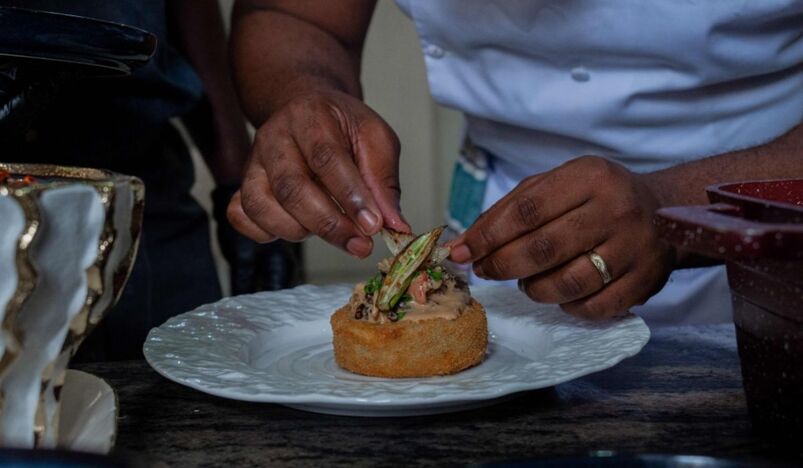
Yam gratin. Safou-fruit butter. Caterpillar sauce wrapped in vol-au-vent pastry. These dishes sound bold, unexpected, and entirely delicious. And right now, they sit at the centre of a quiet culinary revolution unfolding in Kinshasa — the beating, sprawling heart of the Democratic Republic of Congo.
A new generation of Congolese chefs is doing something powerful. They are taking ingredients their grandmothers cooked with and presenting them through the lens of fine dining. Traditional recipes are getting a gourmet makeover — and the world is starting to pay attention.
Inside Kinshasa's Afro-Fusion Fine Dining Scene
High on the top floor of a Kinshasa building, diners clink glasses in a quietly elegant lounge. Below them spreads a megacity of more than 17 million people — chaotic, vibrant, and full of contradiction. Up here, the atmosphere is hushed. The soundtrack is Congolese rumba. The menu rewrites everything you thought you knew about African food.
The restaurant, Zaire — the country's former name — serves Afro-fusion cuisine to local and international guests, using locally sourced ingredients in high-end dishes inspired by traditional Congolese cooking.
On the menu: ravioli filled with kilebu — a speciality built on mushroom and peanut butter — alongside ballotine of sole cooked in butter made from safou, a tart local fruit native to Central and West Africa. These are not small twists on Congolese staples. These are full reimaginings, plated with the precision of European haute cuisine but rooted firmly in Congolese soil.
The Woman Who Brought Congolese Heritage Back Home
The restaurant's owner, Noushka Teixeira, is not a trained chef. She is a passionate advocate for Congolese food culture — and she has the stubborn conviction to back it up.
Teixeira, who holds both Congolese and Brazilian roots, spent fifteen years living in Belgium — the DRC's former colonial ruler — before deciding to return home and put Congolese culinary heritage in the spotlight. She and her husband opened the restaurant last year.
The motivation runs deeper than business. The world, Teixeira argues, has never been given the chance to see the DRC as anything other than a country at war or in crisis.
"When people say 'DRC' abroad, it's always pejorative. It's all talk about war or how Congolese people love to dance," she said — the irony not lost on anyone listening to the rumba playing softly in the background.
Her response to that narrative is the restaurant itself. She believes Congolese people have internalised a damaging idea — that anything foreign is automatically superior.
"We Africans have a tendency to tell ourselves that everything foreign is better, but that's because we've never bothered to truly exalt our own products," she said.
The Chef Who Cooks Like His Grandmother Taught Him
In the kitchen at Zaire, chef Samuel Bobo tells his own version of that story. His path to cooking began in a university economics department. His heart was always elsewhere.
Bobo studied economics at university, but his passion for food prevailed. He trained under Belgian chefs working in Kinshasa before striking out to recreate the recipes he learnt growing up.
On a recent evening, he was simmering mboto — a local freshwater fish — with tomatoes and onions. He described the dish simply: it was inspired by what his grandmother used to make.
That connection between family memory and professional kitchen is not accidental. It is the philosophy driving the entire movement. Congolese cuisine carries generations of knowledge. These chefs see their job as translating that knowledge into something a new audience can experience and respect.
The Gaps That Make It Hard
The DRC holds some of Africa's most fertile land. Yet farming its vast interior remains difficult. Roads in many regions are barely functional. Food supply chains are fragile and unreliable.
Only a fraction of the country's arable land is farmed, while deteriorating roads make transportation deeply challenging. The DRC imports most of its food supply.
Teixeira is direct about this tension. She buys fruits and vegetables from local markets. Meat is a different problem. To guarantee quality, she imports beef from Belgium — a frustrating compromise for someone whose whole project celebrates the local.
For chef Archi Dimosi, who operates from Kinshasa's outskirts, supply uncertainty is simply a daily reality that sharpens his instincts.
"You have to be creative to be able to adapt to the unexpected and change your menu at the last minute," said Dimosi, who specialises in merging Congolese flavours with European cooking techniques.
He has spent years building his own supplier network. Fish arrives from Lake Tanganyika and the Atlantic coast. Beef comes from the western province of Kongo-Central. Lamb travels from Goma in the east. Each ingredient has a story and a sourcing challenge behind it.
Vol-Au-Vent with Caterpillar Sauce Is Exactly What It Sounds Like
Dimosi's most talked-about dish is precisely the kind of thing that makes people pause before tasting and then reach for a second bite. He prepares vol-au-vent pastry using sweet potato dough and fills it with mushroom and mbinzo sauce — mbinzo being the Congolese word for caterpillar.
Insects have long been a protein staple in Congolese cooking. Congolese cuisine emphasises fresh, locally sourced ingredients from subsistence farming and foraging, including edible insects like caterpillars and grasshoppers as protein sources. Dimosi simply applies the logic of fine dining to make that tradition visible to a broader audience.
He is self-taught. He learned by watching French cuisine videos online — absorbing technique from the outside world and applying it to the ingredients he grew up with.
The Business Reality Behind the Passion
Dimosi's story carries a warning as much as an inspiration. He opened a restaurant in central Kinshasa and closed it within the year. The economics were brutal.
"All the taxes, rent, bills... I was paying $4,500 a month, I couldn't cope anymore," he said.
He pivoted to catering — a model that lets him control costs while still delivering gourmet Congolese meals to clients who want them. It works better. But it underlines a harder truth.
"Young chefs in the DRC face a lot of problems, but they deserve a chance," said Dimosi, who now teaches young trainees while also working on a cookbook of Congolese recipes.
A Culinary Education Gap That Costs Everyone
One obstacle stands out above the rest. Formal culinary education barely exists in the DRC — and what little there is skews heavily toward Western dishes.
"There's not really any culinary school in the DRC. A lot of people learn on the job," said Teixeira, who trained most of her own kitchen team herself.
Dimosi puts it even more bluntly. Culinary schools "mostly teach how to make Western dishes," he said. "Congolese cuisine doesn't get taught enough."
That gap has consequences. Without formal training pathways rooted in local food culture, each generation of Congolese cooks must reinvent the wheel. Knowledge that should pass smoothly from teacher to student gets lost, rediscovered, or simply forgotten.
The chefs working in Kinshasa today are building that infrastructure from scratch — through cookbooks, mentorships, catering businesses, and restaurants like Zaire that dare to say Congolese food belongs in the same conversation as any other great cuisine.
Why This Movement Matters Beyond the Plate
What is happening in Kinshasa's kitchens is not just about food. It is about the story a country tells about itself. The DRC carries a complex, painful history — Belgian colonisation, decades of conflict, economic instability. Its cuisine absorbed all of those influences. Belgian colonial rule, particularly from 1908 to 1960, introduced Western cooking techniques that blended with local Congolese traditions, shaping everything from stew preparation to urban food culture.
What these chefs now do is reclaim that hybrid history on their own terms. They use European technique not as a replacement for Congolese identity but as one more tool to express it. Safou butter in a fine-dining sauce. Kilebu in ravioli. Caterpillar in pastry. Every dish is both a cultural statement and a genuinely compelling meal.
The movement is small. The obstacles are real. But the appetite — among diners, among young chefs, and among Congolese people tired of seeing their country only through the lens of conflict — is clearly there.
Key Takeaways
- Restaurant Zaire in Kinshasa serves Afro-fusion fine dining using locally sourced Congolese ingredients.
- Owner Noushka Teixeira returned from Belgium to champion Congolese culinary culture.
- Chef Samuel Bobo draws on family recipes and trains under Congolese and Belgian influences.
- Chef Archi Dimosi, 34, sources ingredients from Lake Tanganyika, Kongo-Central, and Goma.
- Supply chain challenges force chefs to source some products like beef from abroad.
- Formal culinary schools in the DRC rarely teach traditional Congolese cooking.
- Dimosi closed his restaurant due to costs of $4,500 per month and now runs a catering business.
- He is working on a cookbook to document and preserve Congolese recipes.

_03-27-2026_08-27.jpg)
.jpg)
.jpg)
.jpg)


.jpg)
.jpg)




.jpg)


.jpg)
.png)
.jpg)








Leave a comment