


An entrepreneur lands in Frankfurt for a connection, glances at the passport-control line curling toward the far wall, and notices the short lane reserved for holders of a different passport. It’s a small moment, but it’s often where the second-nationality question begins. For wealthy individuals and families who want better global mobility and a more diversified position, the answer typically points to st kitts and nevis citizenship by investment, an option that has been running for decades.
Plenty of people who look at a second passport aren’t planning to move. They want insurance, meaning a document that keeps borders open if a home country tightens visa rules, changes its tax regime or becomes harder to travel from. St Kitts and Nevis citizenship fits that profile because it asks so little of the holder in daily life.
Two features do most of the work. Dual citizenship is allowed, so the new passport doesn’t replace the old one and the applicant keeps their original nationality. And there’s no residency requirement, which means no minimum number of nights on the islands each year. For a founder who splits the year between two or three cities, that matters more than any beach.
St Kitts and Nevis citizenship by investment and the 1984 track record
The federation launched its program in 1984, and St Kitts and Nevis citizenship by investment is described as the world’s longest-running initiative of its kind. Age isn’t a guarantee of anything. Still, a scheme that has operated for more than four decades is easier to judge than one introduced last year, because its rules, processes and track record are visible rather than promised.
The islands benefit as well. Foreign investment has flowed into a small economy and helped pay for community projects. Successful applicants receive St. Kitts citizenship and a naturalization certificate, so what they hold is citizenship itself rather than a visa or a residence permit.
The passport’s main terms are easy to check before anyone commits:
-
Citizenship for life, with the passport renewable every 10 years, so the status doesn’t lapse when a document does.
-
A CARICOM passport issued for international travel, backing the visa-free travel people want from a second passport.
Family cover, since an application can include a spouse, children under 30 and parents over 65.
One caveat deserves an early check. St Kitts and Nevis allows dual citizenship, but the applicant’s home country sets its own rules, and a few countries don’t recognize a second nationality.
Confirming that before applying costs nothing and can prevent an expensive surprise. It’s also worth asking a lawyer at home whether holding foreign nationality affects public-sector jobs or security clearances, since those rules vary.
What the St Kitts and Nevis citizenship by investment program requires of applicants
Due diligence is thorough. The program expects a clean background check, proof of sufficient financial resources and compliance with health criteria. Interviews are part of the process as well, so the paperwork and the person need to tell the same story.
Residence is the pleasant surprise. Unlike some other programs, this one doesn’t ask investors to spend a set period in the country each year, and some options can be completed remotely. A family that works abroad doesn’t have to rearrange its calendar around a mandatory stay.
That flexibility is one reason the St Kitts and Nevis citizenship by investment program tends to suit people who want protection rather than a new address. Anyone who does want to spend time on the islands is free to do so, of course.
The financial contribution is a separate decision with its own routes and thresholds, and it makes sense to settle it after the eligibility questions above.
It helps to have a few essentials in hand before any form is filled in. Start with identity and civil-status documents for every person on the application, such as passports plus marriage and birth certificates. Add evidence of where the funds come from, because sufficient financial resources must be demonstrated and a thin paper trail slows review. Then gather the medical and police records, which answer the health criteria and the background check the program lists.
Gaps in this material can hold up a file, but they’re usually fixable well before submission. Sorting them out early also exposes problems such as mismatched name spellings across documents.
St. Kitts and Nevis citizenship in everyday life and tax terms

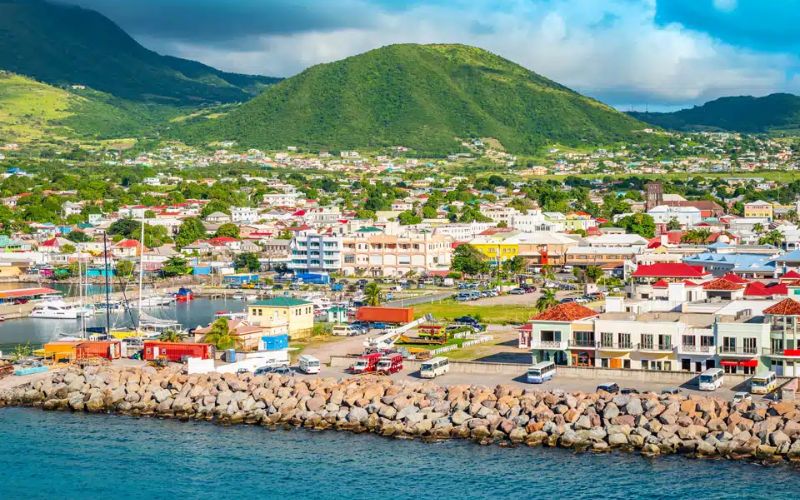
Some holders never relocate, but others visit or settle, so daily life is worth knowing. English is the official language, which keeps communication easy. The federation is small, with about 48 thousand people as of 2024, Basseterre as its capital and the East Caribbean dollar as its currency.
Anyone with St. Kitts and Nevis citizenship who does spend time there will find a close-knit community, since the small population helps residents form connections. The low crime rate adds to the feeling of safety, and life moves at a relaxed pace with hiking and diving close at hand. The scenery helps too, with beaches, rainforests and marine life within easy reach.
It isn’t a cheap place to live. The country relies on imported goods, so the cost of living is generally higher than in many other Caribbean destinations, and housing, groceries and utilities can all cost more.
Services cover the basics. Healthcare is both public and private, and recent improvements to hospitals and clinics help, although specialized treatment may mean traveling to a nearby country. Families will find an established education system in English, including international schools.
Residents of the federation benefit from a favorable tax environment, with none of the following levied on them:
-
Personal income tax, which is usually the largest single tax bill a working individual or family faces.
-
Capital gains tax, which matters to anyone who expects to sell shares, a business or property at a profit.
-
Inheritance and gift taxes, so passing assets to the next generation is noticeably simpler to plan.
The main taxes are a relatively low property tax and a value-added tax on goods and services.
One warning, though. A second passport doesn’t cancel obligations to the home country, because tax residency usually follows where a person lives rather than which passport they hold, so a tax advisor should confirm what changes and what doesn’t.
A sensible next step is to settle three questions before comparing programs in detail. Does the home country accept dual nationality? Which relatives belong on the application? Which documents are already in order? Advisory firms such as Migrate World, which works with applicants on this program, can walk through the current requirements once that groundwork is done.