


 By admin - May 06, 2026
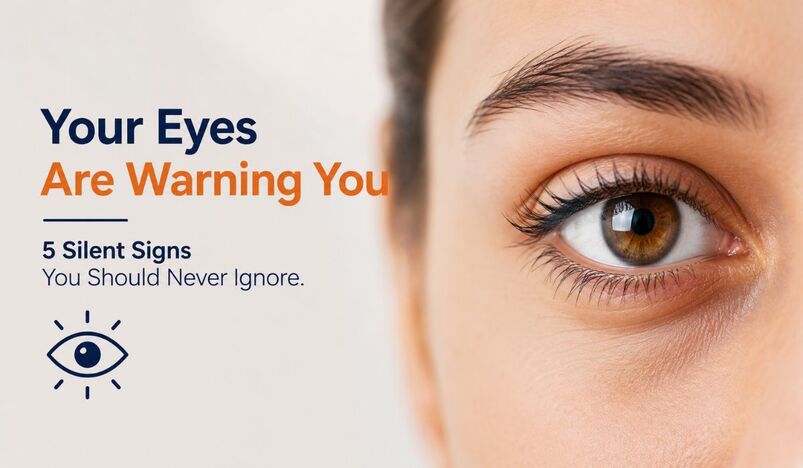
We tend to dismiss eye discomfort as tiredness or too much screen time. But your eyes are rarely just tired — they're often the first part of your body to notice something is genuinely wrong. In many cases, they show warning signs before the rest of your body even knows there's a problem.
Ignoring these subtle signals can lead to permanent damage — or a missed diagnosis of something serious like diabetes, high blood pressure, or a neurological condition.
Here are five signs worth paying close attention to.
1. Persistent Blurry or Distorted Vision
Occasional blurriness happens to everyone — a late night, a long drive, hours of reading. But if your vision goes blurry regularly without an obvious reason, that's worth taking seriously. This isn't simply about needing a stronger prescription.
It could point to:
- Early signs of retinal damage or degeneration
- Diabetes-related changes to the blood vessels in your eye
- The beginning stages of glaucoma or cataracts
Sudden, rapid blurring — especially in one eye — is a genuine emergency and needs same-day medical attention, not an appointment next week.
Ask yourself: If your screen looks consistently fuzzy, your eyes aren't "just tired." They may be telling you they're under a level of strain they can't handle on their own.
2. Frequent Eye Strain and Headaches
It's easy to blame phones and laptops for every headache — and sometimes they are the culprit. But when eye strain and tension headaches become a daily routine, screens are usually masking a deeper issue, not causing it.
It could point to:
- An undetected or uncorrected refractive error (near/farsightedness or astigmatism)
- Eye muscle imbalance that forces your eyes to work harder than they should
- Digital eye syndrome that's moved beyond the "just take a break" stage
Ask yourself: Daily discomfort is never "just how things are." If it's happening that often, something has gone out of balance — and it deserves a proper look.
3. Sudden Flashes, Floaters, or Light Sensitivity
A few small floaters drifting across your vision? Fairly common, often harmless. But a sudden surge of new floaters, flashing lights at the edges of your vision, or a shadow creeping across your sight?
That is different — and it requires urgent attention.
It could point to:
- Retinal detachment — a sight-threatening emergency needing same-day care
- Posterior vitreous detachment, which can precede retinal tears
- Neurological conditions that affect how your brain processes visual signals
This is the one sign on this list where waiting even a day can meaningfully change the outcome. If it's sudden and severe, don't wait.
Ask yourself: There's no such thing as "probably nothing" when it comes to sudden changes in your vision. Trust the urgency you feel — it's usually correct.
4. Dry, Irritated, or Persistently Red Eyes
Waking up with slightly dry eyes after a rough night's sleep is normal. But chronic redness, a constant burning or gritty sensation, or eyes that are irritated more days than not — that's your body flagging something it can't fix on its own.
It could point to:
- Dry eye disease — a tear film that isn't functioning as it should
- Blepharitis or meibomian gland dysfunction, both very treatable if caught early
- Low-grade allergic reactions or underlying inflammatory conditions
Left untreated, chronic dryness and inflammation can gradually damage your cornea and affect your long-term vision quality — not just your comfort.
Ask yourself: Reaching for eye drops every few hours isn't a solution — it's a habit that covers up a problem. Drops treat the symptom; a doctor can address the cause.
5. Changes in How Your Eyes Look
This one goes beyond what you see — it's about what others, or a mirror, can see. Visible changes in and around your eyes aren't always cosmetic. Sometimes they're your body using the most visible part of your face to send a message.
It could point to:
- Yellowing of the whites (sclera) — can indicate liver stress or jaundice
- Unusual puffiness or bulging — sometimes associated with thyroid disorders
- Persistent dark circles or pallor — can reflect iron deficiency, anaemia, or chronic fatigue
None of these alone confirm a diagnosis. But they are legitimate reasons to see a doctor — not just reach for a concealer.
Ask yourself: If something looks different and has stayed that way for weeks, it deserves a conversation with a professional.
Why Early Detection Actually Matters
Most eye conditions develop quietly. By the time symptoms feel serious enough to act on, the window for the easiest treatment may already be smaller.
- Silence isn't safety — Many serious conditions like glaucoma cause no pain at all until significant damage has already occurred
- Vision loss is often permanent — Unlike broken bones, damage to the retina or optic nerve usually doesn't heal; early intervention is the best way to protect what you have
- Your eyes reflect your whole body — An eye exam can reveal signs of diabetes, hypertension, and autoimmune disease, sometimes before any other symptom appears
What You Can Actually Do
- Get an annual eye exam — even if your vision feels fine; many conditions show up in an exam before you feel them
- Act immediately on sudden changes — new floaters, flashes, sudden blurring? Same-day care, not a week from now
- Don't self-diagnose online — use the internet to find a good eye doctor, not to talk yourself out of needing one
- Manage digital strain smartly — the 20-20-20 rule helps (every 20 minutes, look 20 feet away for 20 seconds), but it won't fix an underlying condition
Final Thought
Your body rarely shouts first — it whispers. And your eyes are often the first place it does that.
Paying attention to these signs isn't being dramatic. It's being responsible. Your eyesight isn't replaceable. Treat it accordingly.

_20-08-2026_05-08.jpg)
_27-51-2026_11-51.png)
_27-43-2026_12-43.png)



.jpg)
.jpg)




.jpg)


.jpg)
.png)
.jpg)













Leave a comment