


 By neha - July 03, 2026
The Planet With The Slowest Spin
Venus already holds the record for slowest planetary spin. A single Venus day lasts about 243 Earth days. That number, however, never stays completely fixed year after year.
How Magellan First Measured A Venus Day
NASA's Magellan orbiter first measured this rotation back in the 1990s. Magellan tracked surface features rotating beneath it and calculated a Venus day at 243.0185 Earth days. Scientists assumed this number would remain constant forever.
Venus Express Uncovers A Strange Shift
Years later, a European spacecraft found something unexpected. Venus Express discovered that certain surface features sat displaced by up to twenty kilometers from expected positions. This mismatch only made sense if Venus had slowed down slightly.
Thirty Years Of Data Reveal A New Average
Researchers combined decades worth of ground based observations recently. Nearly thirty years of Earth based measurements produced a new average Venus rotation rate. This fresh average differs from Magellan's original short term measurement.
Why A Venus Day Never Stays The Same
Scientists also discovered the Venus day isn't just slower overall. Venus actually speeds up and slows down constantly, shifting by as much as twenty minutes. Thick clouds and mountain ranges apparently interact with fierce atmospheric winds.
A Crushing Atmosphere Behind The Mystery
Venus carries a crushing atmosphere unlike anything on Earth. This atmosphere weighs roughly ninety three times more than Earth's atmosphere and presses down with far greater force. Powerful winds moving over rugged terrain nudge the entire planet's spin.
Why This Matters For Future Missions
These tiny shifts matter enormously for future lander missions. Small rotation errors could shift a landing spot by more than eighteen miles. NASA plans upcoming Venus missions, including DAVINCI and VERITAS, later this decade.
A Strange World That Keeps Scientists Watching
Venus remains one of the strangest worlds nearby. A Venus day still outlasts a full Venus year today. Scientists keep watching this shifting spin with fresh interest.
Quick Reference Updated Rotation And Revolution Periods
Older charts often round these numbers for simplicity. Modern tracking gives a more precise picture of each planet. Here is the current data astronomers rely on today.
| Planet | Rotation Period (1 Full Spin) | Revolution Period (1 Full Orbit) |
| Mercury | 58.6 Earth days | 88 Earth days |
| Venus | 243 Earth days (retrograde) | 224.7 Earth days |
| Earth | 23 hours 56 minutes | 365.25 Earth days |
| Mars | 24 hours 37 minutes | 687 Earth days |
| Jupiter | 9 hours 55 minutes | 11.86 Earth years |
| Saturn | 10 hours 33 minutes | 29.46 Earth years |
| Uranus | 17 hours 14 minutes (retrograde) | 84.02 Earth years |
| Neptune | 16 hours 6 minutes | 164.8 Earth years |
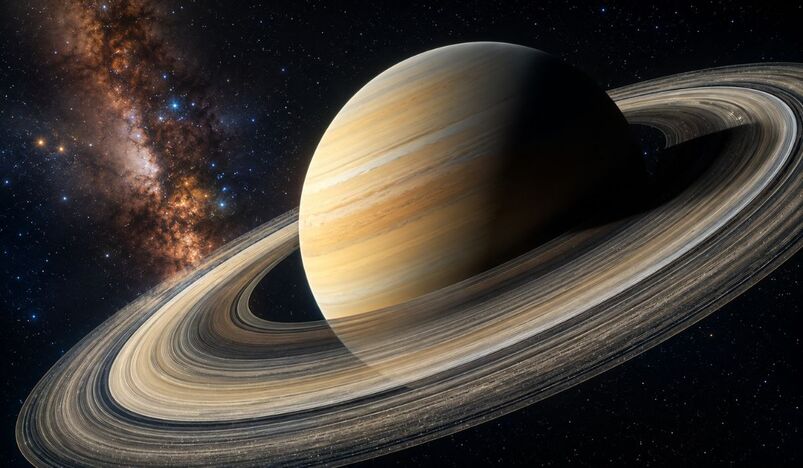
Venus and Uranus both spin backward compared to most planets. Scientists call this unusual pattern a retrograde rotation. Saturn's rotation figure above matches the ring based measurement NASA confirmed recently.

_20-08-2026_05-08.jpg)
_27-51-2026_11-51.png)
_27-43-2026_12-43.png)



.jpg)
.jpg)




.jpg)


.jpg)
.png)
.jpg)













Leave a comment