


 By neha - June 29, 2026
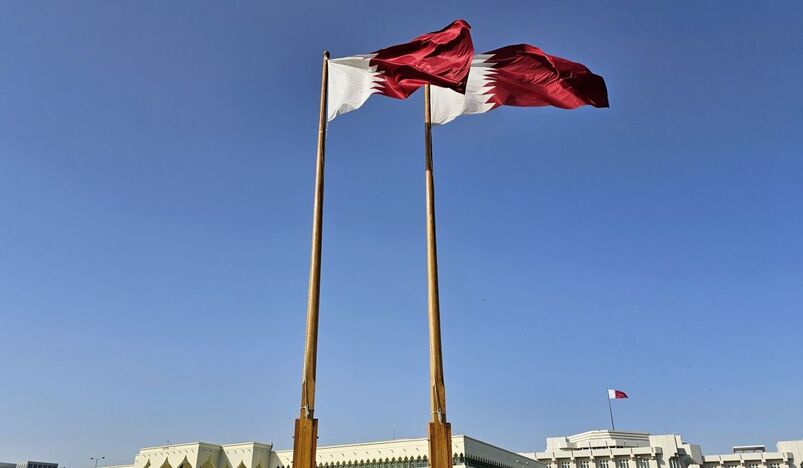
Qatar has formally condemned the latest Israeli military incursions into the Quneitra and Daraa governorates of Syria. The statement came on June 29, 2026, as Israeli forces continued a pattern of ground operations in southern Syrian territory.
The State of Qatar condemned the incursion carried out by Israeli occupation forces into the Quneitra and Daraa governorates of the Syrian Arab Republic and the artillery shelling that accompanied it, which targeted several areas.
The condemnation reflects Qatar's consistent position on Syrian territorial integrity. It also comes as ground-level reports from southern Syria describe an intensifying pattern of Israeli military activity across both governorates.
What Qatar's Ministry of Foreign Affairs Said
The Qatari statement went beyond a simple diplomatic objection. It named specific legal frameworks and called on the international community to take concrete action.
Qatar considers this aggression a flagrant violation of Syria's sovereignty and a blatant breach of international law and international humanitarian law.
The Ministry of Foreign Affairs affirmed that the continuation of these dangerous Israeli aggressions will exacerbate tensions in the region and undermine efforts aimed at enhancing security and stability.
The Ministry called on the international community to fulfill its responsibilities, deter Israel, compel it to comply with international law, and hold it accountable for its crimes and repeated aggressions.
This language is direct and unusually specific. Qatar did not simply issue a condemnation. It demanded accountability by name and called on global bodies to act rather than observe.
The Ministry renewed the State of Qatar's full solidarity with the Syrian Arab Republic, its government and people, and reaffirmed its firm supportive stance on Syria's sovereignty, unity, and territorial integrity, as well as all that contributes to achieving security and stability for its people.
What Is Actually Happening on the Ground in Quneitra and Daraa
To understand the weight of Qatar's statement, the situation on the ground requires context. What Israeli forces have been doing in both governorates is documented in detail by Syrian state media, local sources, and international reporters.
Quneitra Governorate
Israeli violations in Syria's southwestern Quneitra province have intensified since the country's liberation, leaving growing humanitarian, economic and security consequences for residents through repeated military incursions, arrests, attacks on civilians and damage to infrastructure.
Israeli occupation forces have established nine forward military positions inside Syrian territory in Quneitra and neighbouring Daraa province, including at Mount Hermon, Qurs al-Nafl, Taloul al-Humr, Jubata al-Khashab forest, al-Hamidiyah, al-Adnaniyah, Tal al-Ahmar al-Gharbi, the destroyed Quneitra base and al-Jazeera point.
Israeli incursions and search campaigns have become a source of fear for residents, who worry they could lead to the detention of some young men, amounting to enforced disappearance of the detainee in the absence of any information about the destination to which Israel takes him, and without any chance to contact him.
Israeli occupation forces have arbitrarily detained 47 Syrian civilians since Syria's liberation in December 2024, taking them to undisclosed locations.
The most recent documented incidents include the following. A Quneitra Media Directorate report confirmed that an Israeli army patrol entered west of Asha in southern Quneitra countryside, where it interrogated several shepherds before withdrawing. Gunfire was also reported near al-Mantara Dam from the direction of al-Adnaniyah base in central Quneitra countryside.
Israeli forces carried out a series of raids on residential homes in the southern countryside of Quneitra, including the interrogation of a local journalist. The incursion targeted ten homes in the town of Saida in southern Quneitra countryside.
Daraa Governorate
Israeli occupation forces advanced into Jamla town in western Daraa countryside, carrying out searches of several homes. An occupation force consisting of eight military vehicles and a tank set off from the Tal Abu al-Ghaithar checkpoint towards the Wadi al-Raqqad area on the administrative border between Quneitra and Daraa governorates.
An Israeli force consisting of five military vehicles entered Abidin village and set up two checkpoints on the road leading to Jamla village. The force stopped passersby including children and searched them, preventing civilians from leaving Abidin toward Jamla, and fired shots into the air.
The sources indicated that field developments prompted a number of residents of Abidin village to leave the town toward neighbouring areas amid a state of tension among residents.
The civilian displacement happening in real time makes Qatar's call for international accountability more urgent. People are leaving their homes because of military pressure on the ground.
The Legal Framework Qatar Invoked
Qatar's reference to international law is grounded in specific legal instruments that govern Israeli military activity in southern Syria.
Quneitra is located in the Golan Heights, which the United Nations recognises as part of Syria. Israel seized 1,200 square kilometres of the western part of that region in the Six-Day War in 1967. During the 1973 Arab-Israeli War, Syria attempted to take back the Golan Heights but failed. The conflict ended with a disengagement agreement in 1974 that saw the establishment of a United Nations buffer zone, which separates Israeli-occupied territory from the remaining part that is still under Syria's control.
Once the al-Assad regime fell, Israel pushed deeper into Syrian territory, occupying the buffer zone and saying the 1974 deal with Syria had collapsed. It also advanced into the Quneitra area, setting up two military checkpoints last year in the villages of Ain Ziwan and al-Ajraf.
Syria's Ministry of Foreign Affairs and Expatriates condemned the Israeli military operations in Quneitra and Daraa provinces, including ground incursions and artillery shelling, considering them a flagrant violation of Syrian sovereignty and a new breach of international law, the UN Charter, and the 1974 Disengagement Agreement.
Both Qatar and Syria invoke the same legal instruments. The 1974 Disengagement Agreement is the foundational document governing the ceasefire line. Israeli operations inside the buffer zone violate that agreement under any standard reading of the text.
The Scale of Israeli Military Activity in 2025 and 2026
The current situation did not emerge overnight. It accelerated sharply after December 2024 and has continued through the first half of 2026.
Since the toppling of longtime leader Bashar al-Assad in December 2024, Israeli military incursions have become more brazen, violent and frequent. According to a tally by the Armed Conflict Location and Event Data (ACLED), Israel launched an average of almost two attacks a day for a total of more than 600 air, drone or artillery attacks across Syria throughout 2025.
The bulk of Israeli attacks have been concentrated in the southern Syrian governorates of Quneitra, Daraa, and Damascus, which account for nearly 80 percent of all recorded Israeli attacks.
Israeli forces have been carrying out near-daily incursions into Syrian territory, particularly in the Quneitra countryside, detaining civilians, setting up checkpoints, questioning those passing through and destroying farmland.
These numbers matter. Qatar's condemnation is not a response to an isolated incident. It is a response to a sustained and documented military campaign conducted inside Syrian territory without legal justification under international law.
Civilian Impact on the Ground
The human cost of these operations has been documented by local administrations, Syrian state media, and independent journalists operating in the region.
Mohammed al-Saeed, director of Quneitra's Information Directorate, said residents of the province continue to live under constant psychological and security pressure as a result of a systematic pattern of Israeli violations. He said the escalation has damaged key infrastructure including roads, water networks and civilian property, further disrupting daily life across the province.
Abdul Rahman Khalaf, head of the Quneitra Farmers' Union, said Israeli forces have also pursued shepherds, restricted access to grazing land, sprayed chemical pesticides on crops and seized agricultural land. Israeli forces appropriated about 10,000 dunums of the town's land following military incursions after 2024. The area includes forests, natural grazing land and previously reclaimed farmland.
On April 3, 2026, Osama al-Fahd, a resident of Zaaroura village, was killed after Israeli forces fired a tank shell at his vehicle in southern Quneitra countryside.
These are not abstract violations of international law. They are disruptions to the daily lives of farming communities, shepherds, journalists, and civilians. Qatar's solidarity statement directly addresses this human dimension alongside the legal one.
Qatar's Role in Regional Stability and Arab Diplomacy
Qatar's condemnation carries diplomatic weight that goes beyond the statement itself. Qatar has consistently positioned itself as a mediator and a consistent voice for international legal norms in the region.
On Syria specifically, Qatar reaffirmed three principles in its June 29 statement. It supports Syrian sovereignty. It supports Syrian territorial unity. It supports all efforts that contribute to the security and stability of the Syrian people.
These three principles align Qatar with the broader Arab and international consensus that Israeli military activity inside Syrian territory violates international law regardless of the political transition Syria is currently undergoing.
Israel has faced widespread criticism for ending the 1974 ceasefire agreement with Syria and taking advantage of the chaos in the war-torn nation to seize territory. The United Nations, along with several Arab nations, condemned Israel's actions as breaches of international law and violations of Syria's sovereignty.
Qatar's statement adds its voice to that consensus at a moment when the situation on the ground is deteriorating. The artillery shelling that accompanied the latest incursions represents an escalation beyond the ground patrols, checkpoints, and civilian detentions that have characterised much of the recent activity.
Syria Also Responded to the Latest Incursions
Qatar's condemnation came alongside a formal response from the Syrian government itself.
Syria's Ministry of Foreign Affairs and Expatriates condemned the Israeli military operations in Quneitra and Daraa provinces, calling on the United Nations and the international community to assume their responsibilities and take measures to ensure respect for the agreement and safeguard Syrian sovereignty and territorial integrity.
Syria continues to condemn Israel's repeated violations of the 1974 Disengagement Agreement, including incursions into southern Syrian territory, attacks on civilians, home raids, arrests, land bulldozing, and shelling incidents. Syria stresses that all measures taken by Israeli forces inside Syrian territory are null and void and carry no legal effect under international law.
Both governments, Qatar and Syria, have now made the same legal argument. The incursions violate the 1974 agreement. They violate the UN Charter. They violate international humanitarian law. And they undermine the regional stability that both countries say they want to build.
What Qatar Is Asking the International Community to Do
Qatar did not limit its statement to condemnation. It issued a specific call for action.
The Ministry of Foreign Affairs asked the international community to fulfill its responsibilities. It asked the international community to deter Israel. It asked for Israel to be compelled to comply with international law. And it asked for accountability for what it described as crimes and repeated aggressions.
This is a stronger formulation than standard diplomatic language. It uses the word crimes. It uses the phrase repeated aggressions. And it calls for deterrence rather than simply dialogue or negotiation.
For anyone following Qatar's foreign policy closely, this statement signals that Doha views the situation in southern Syria as serious enough to warrant a direct international response rather than continued observation.
Key Facts at a Glance
Date of Qatar's statement: June 29, 2026
- Locations involved: Quneitra governorate and Daraa governorate, southern Syria
- Nature of Israeli activity: Ground incursions with armoured vehicles and artillery shelling targeting multiple areas
- Qatar's legal characterisation: Flagrant violation of Syrian sovereignty and a blatant breach of international law and international humanitarian law
- Qatar's demand: International community to deter Israel and hold it accountable
- Qatar's position on Syria: Full solidarity with Syrian government and people, firm support for sovereignty, unity, and territorial integrity
- Background: Israel has pushed deeper into Syrian territory since the fall of Assad's government in December 2024, with near-daily military activity recorded across Quneitra and Daraa governorates throughout 2025 and into 2026.


_20-08-2026_05-08.jpg)
_27-51-2026_11-51.png)
_27-43-2026_12-43.png)



.jpg)
.jpg)



.jpg)


.jpg)
.png)
.jpg)













Leave a comment