


 By Guest - August 12, 2026
_12-32-2026_02-32.jpg)
In northeastern Brazil stands a cashew tree so vast that its branches spread to a circumference of around 500 metres — yet the whole sprawling mass is a single plant, whose ground-rooting branches still produce a large annual harvest of fruit.
Known as the Cajueiro de Pirangi, or the world's largest cashew tree, the plant sits in Pirangi do Norte, near the coastal city of Natal in the state of Rio Grande do Norte. To visitors walking the paths beneath it, the sprawling canopy and its many trunks feel like an entire grove; in reality, every branch and root belongs to a single organism.
The tree covers an area estimated at between 7,300 and 8,400 square metres, roughly 1.8 to 2.1 acres, or about the size of two football pitches, making it the equivalent of around 70 normal-sized cashew trees. Its branches spread to a circumference of about 500 metres. It is recognized by Guinness World Records as the largest cashew tree in the world.
Its extraordinary size is the result of a natural mutation. Rather than growing upward, the tree's heavy branches grow sideways and bend toward the ground under their own weight; where they touch the soil, they take root and form new trunks. Over time this has allowed the tree to expand outward like a small forest, and the web of branches and roots has made it difficult to identify the original trunk.
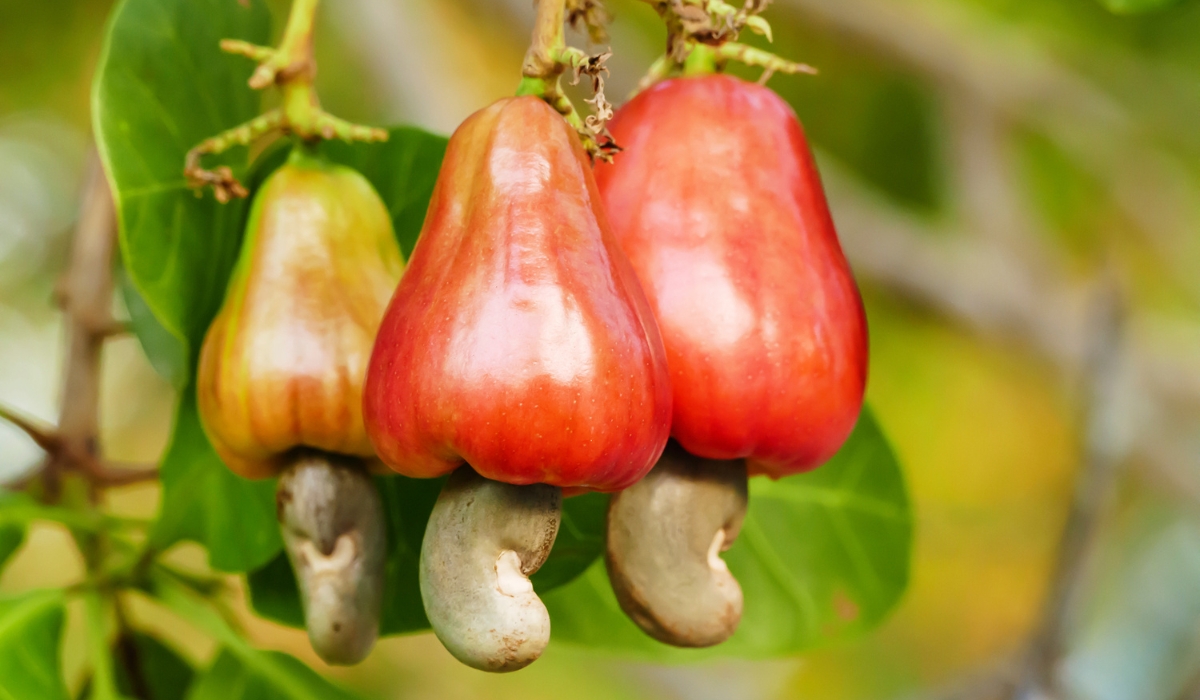
Despite its age, the tree remains highly productive. It yields tens of thousands of cashew fruits each year, an annual harvest that has been put at roughly 2.5 tonnes of fruit. In Brazil, the cashew apple itself is prized as much as the nut; because it is highly perishable and rarely exported, it is mostly consumed fresh locally or used to make juices, sweets and liqueurs.
The tree's age is a matter of some debate. Local folklore holds that it was planted in 1888, reputedly by a fisherman named Luiz Inacio de Oliveira, while some botanists have suggested, based on its growth characteristics, that it could be far older. There is no definitive scientific dating, and the exact age remains uncertain.
Today the Cashew of Pirangi is a legally protected landmark and one of Brazil's most unusual natural attractions. Roads and footpaths have been laid out around it, trimming is limited to preserve its health, and the surrounding markets sell cashew-themed souvenirs, preserves and the local cashew-flavoured cachaca to the visitors it draws each year.
Sources: Guinness World Records and published references on the Cajueiro de Pirangi. The 500-metre figure refers to the branch circumference; age and yield estimates vary between sources.

_20-08-2026_05-08.jpg)
_27-51-2026_11-51.png)
_27-43-2026_12-43.png)



.jpg)
.jpg)




.jpg)


.jpg)
.png)
.jpg)












Leave a comment