


 By Admin - March 20, 2026
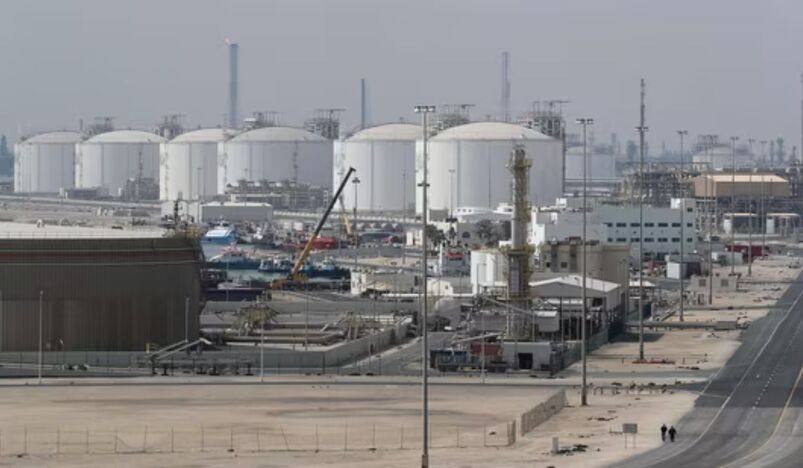
Europe’s natural gas prices jumped as much as 35 percent on Thursday after Iranian and Israeli strikes destroyed some of the most important gas infrastructure in the Middle East, damage that is likely to take years to repair.
The attacks on energy facilities since the start of a U.S. and Israeli war on Iran have brought to life some of the energy industry’s worst fears — that a conflict in the region will inflict long-term damage and shortages on global energy supplies.
“We are now very much down the road of the worst-case doomsday gas-crisis scenario,” said Saul Kavonic, an energy analyst at MST Financial. “For months, if not years, after the war ends and even if it does, a significant amount of disruption to LNG supply could still occur.”
Also on Thursday Iran attacked the Ras Laffan liquefied natural gas facility in Qatar (world’s biggest LNG complex) a day after Israel hit Iran’s massive South Pars gas facilities.
The strike against Ras Laffan wiped out two trains that liquify natural gas (LNG) into other countries, potentially cutting Qatar’s LNG exports by about 17 percent for three to five years.
“I never thought in my wildest dreams that we would be (in) this attack, especially from a brotherly Muslim country, in the month of Ramadan, attacking us like this,” said Saad al-Kaabi, chief executive of QatarEnergy.
He said that the state-owned gas company could be forced to declare force majeure on long-term contracts with Belgium, China, Italy and South Korea.
European gas prices surged as much as 35% on Thursday and oil jumped up to 10%, before paring gains.
Sharp escalation in conflict
The attack on South Pars by Israel and the retaliatory strike on the Ras Laffan plant represent a significant escalation in the conflict, analysts say.
Iranian aerial attacks have already struck a refinery in Saudi Arabia, forced the United Arab Emirates to shut gas facilities and ignite blazes at two Kuwaiti refineries. President Donald Trump warned of retaliation if they continued.
“This latest round of escalation feels like a turning point for markets, as the conflict is not only about military headlines and Strait of Hormuz closure,” said Charu Chanana, chief investment strategist at Saxo in Singapore, referring to the blockage of a major waterway that runs along Iran’s coast through which one-fifth of the world’s crude oil and liquefied natural gas normally passes.
“It is now striking the plumbing of the global energy system. What is upsetting markets now is the increasing risk of stagflation,” she added.
The European Central Bank said on Thursday that the war in Iran would have a “material impact” on near-term inflation, depending on how intense and long-lasting it proved.
Financial markets forecast euro zone inflation to rise toward 4% over the next year, and then take years to return to the ECB’s 2% target.
Traders are factoring in two or three 2023 rate hikes by year-end as the ECB would not stand for another war-fueled inflation spike after being burned before on Russia’s invasion of Ukraine four years ago.
The yield on the 2-year U.S. Treasury note, which serves as a proxy for where investors think the Federal Reserve is headed with interest rates, surged to its highest in nearly eight months, erasing most of the three rate cuts that the Fed delivered last year.
But an International Monetary Fund official on Thursday said that every 10% increase in oil prices — sustained through year-end — translates into about 40 basis points added to global inflation and a reduction in economic output by between 0.1% to 0.2%.
Britain, France, Germany, Italy, Japan and the Netherlands urged an immediate moratorium on attacks against oil and gas facilities and said they were working with energy-producing countries to stabilise markets in a joint statement.
Trump had previously threatened on social media Iran not to retaliate by attacking the Qatari LNG facilities again, warning Tehran it would face a "massive blowup of the entire South Pars Gas Field" if it did. Qatar has a joint stake in the world’s largest gas field, South Pars, with Iran.
Iran threatens ‘zero restraint’ if attacked
During a telephone call between Trump and Israeli Prime Minister Benjamin Netanyahu, the prime minister also said he would not strike any more Iranian energy facilities, Trump said Thursday.
Iran will exhibit “zero restraint” if its infrastructure is attacked again, Foreign Minister Abbas Araqchi said.
So far, gas prices in Europe have doubled since late February when the U.S. and Israel struck Iran.
At the Red Sea port of Yanbu, oil loadings by Saudi Arabia were halted for a short period on Thursday following a drone that fell on the adjacent Aramco-Exxon refinery.
Kuwait Petroleum Corp’s Mina al-Ahmadi and the Mina Abdullah refineries were also hit by drones on Thursday, causing fires at both locations, the state news agency said.
The UAE closed its Habshan gas facilities, having intercepted missiles earlier in the day. There were no reported injuries, the Abu Dhabi Media Office said.
The UAE authorities said they were responding to an incident at the Bab oilfield due to debris fall from missiles intercepted by its air defense systems.

_20-08-2026_05-08.jpg)
_27-51-2026_11-51.png)
_27-43-2026_12-43.png)



.jpg)
.jpg)




.jpg)


.jpg)
.png)
.jpg)











Leave a comment