


 By neha - June 08, 2026
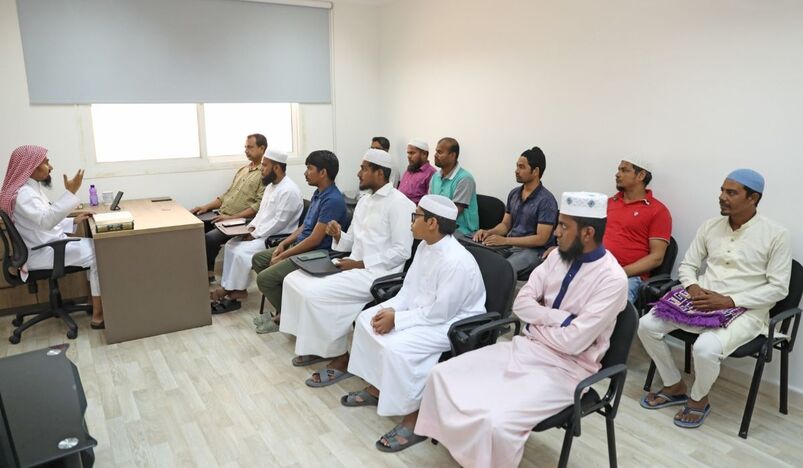
From farm workers to non-Arabic speaking Muslims, the centre brings education, awareness, and community support to every corner of Al Khor.
A quiet but consistent force is at work in Al Khor. The Sheikh Abdullah bin Zaid Al Mahmoud Islamic Cultural Centre, affiliated with the Ministry of Endowments and Islamic Affairs, is running one of Qatar's most wide-reaching outreach programmes — and it is doing it without fanfare.
The branch covers the full stretch of Qatar from Um Salal through Umm Bab to Al Jubaah. Its mandate is broad: cultural, educational, and awareness programmes targeting non-Arab communities living and working across the region.
Where the Work Actually Happens
This is not a programme that operates from behind a desk.
The branch delivers its activities directly to workers at their job sites and in their residential accommodations. It accounts for the cultural and linguistic diversity of its audience — taking into consideration the varied backgrounds of workers who make up a significant portion of Qatar's population.
All programmes run in coordination with the Ministry of Interior and the Ministry of Public Health. Qatar farm and camp owners are also active partners in the effort.
The reach is deliberate. Activities go where the people are — correctional and rehabilitation institutions, worker accommodations, residential communities, and beyond.
The Healing and Hope Initiative
Among the centre's most significant programmes is the "Healing and Hope" initiative. It targets non-Arabic speaking patients in Qatar's healthcare system — bringing psychological comfort and moral support during treatment and recovery.
The branch's field visits under this initiative have drawn strong participation and engagement. Conducted in farm settings and worker accommodation facilities, these visits include general awareness sessions, direct responses to participants' questions and concerns, and introductions to Islamic values alongside Qatar's own customs and traditions.
The centre frames this work as a contribution to integrating expatriate communities into Qatari life — fostering respect for the country's cultural identity while they are here.
Reaching Muslims Who Don't Speak Arabic
One of the branch's most practical contributions is its multilingual awareness programme for non-Arabic speaking Muslims.
These sessions run in five languages — English, Urdu, Tamil, French, and Tagalog. Translated Islamic books and copies of the Holy Quran are distributed to participants at each session.
Dr. Saleh bin Ali Al Marri, Director of the Sheikh Abdullah bin Zaid Al Mahmoud Islamic Cultural Centre, highlighted the unique position the Al Khor branch occupies. Its target audience is exceptionally diverse, its coordination with relevant authorities is strong, and its relationship with the local community reflects genuine, mutual trust.
Why Community Coordination Is Central
The director pointed to two factors behind the branch's consistent success — strong community ties among farm and camp workers, and a growing awareness among those workers of the value of educational and cultural programming.
"The branch's success is largely attributed to the strong community participation of farm and camp workers," he said, noting that this engagement reflects a broader shift in how non-Arab communities in Qatar view cultural and religious outreach.
The branch also organizes regular programmes to promote religious and cultural awareness — reinforcing values of coexistence, mutual respect, and community engagement across all nationalities it serves.
A Model Built on Coordination and Reach
What makes the Al Khor branch distinctive is not any single programme. It is the system behind all of them.
Coordination with the Ministry of Interior, the Ministry of Public Health, Qatar farm owners, and camp management creates a network that gets programming directly to the people who need it. Multilingual delivery ensures no community is left out due to a language barrier. Field visits ensure the work reaches people who cannot come to the centre.
The result is a cultural and educational infrastructure that serves one of Qatar's most diverse and geographically spread communities — consistently, respectfully, and in their own language.
_20-08-2026_05-08.jpg)
_27-51-2026_11-51.png)
_27-43-2026_12-43.png)


.jpg)
.jpg)



.jpg)


.jpg)
.png)
.jpg)












Leave a comment