

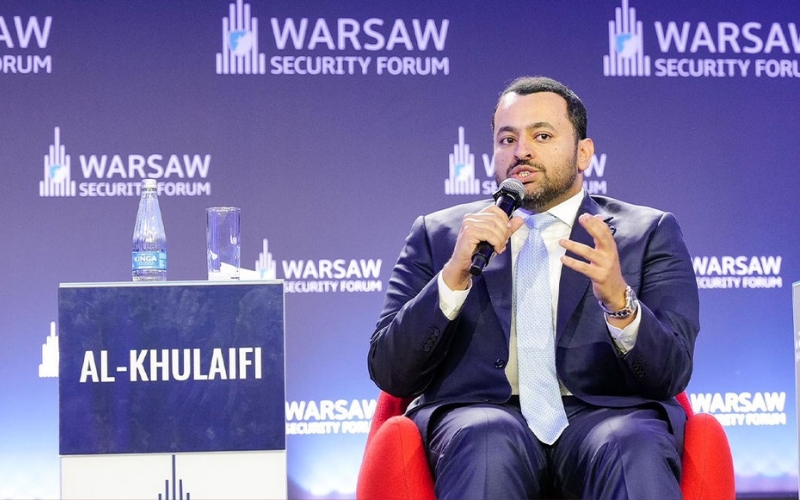
Warsaw, October 14, 2026 : HE Minister of State at the Ministry of Foreign Affairs Dr. Mohammed bin Abdulaziz bin Saleh Al Khulaifi has reaffirmed that mediation remains central to Qatar’s foreign policy, highlighting the country’s more than two decades of efforts to facilitate dialogue and resolve conflicts.
Speaking during a high-level panel titled “Negotiating Peace in the Middle East: Lessons from the Frontlines of Diplomacy” at the Warsaw Security Forum in Poland, Al Khulaifi said Qatar’s commitment to mediation stems from its belief that national security is closely linked to regional stability.
He outlined key lessons from Qatar’s mediation efforts, including the importance of keeping communication channels open, prioritizing urgent humanitarian needs, preventing complex issues from obstructing progress on other matters, ensuring agreements are implemented and strengthening coordination among mediators.
On Gaza, Al Khulaifi stressed the need to implement agreed understandings, enable the Palestinian committee to carry out its responsibilities and establish a verification mechanism linking the stages of weapons decommissioning with Israeli withdrawal. He also highlighted the importance of deploying a stabilization force, beginning reconstruction and maintaining a clear political path towards establishing a Palestinian state.
Addressing the wider regional conflict, he said Qatar would continue its diplomatic efforts and called for humanitarian confidence-building measures. He emphasized the need to address the Iranian nuclear file, freedom of navigation and sanctions through separate tracks.
Al Khulaifi also called for using specific ceasefire periods to reopen maritime corridors, stressing that any new understanding should include clear implementation mechanisms and coordinated steps involving regional countries.
He highlighted Saudi Arabia’s role in leading the regional track and Oman’s importance in addressing issues related to the Strait of Hormuz.
Concluding his remarks, Al Khulaifi emphasized the need to protect mediators, provide them with political support and coordinate their efforts to advance diplomatic solutions.
Source : QNA