

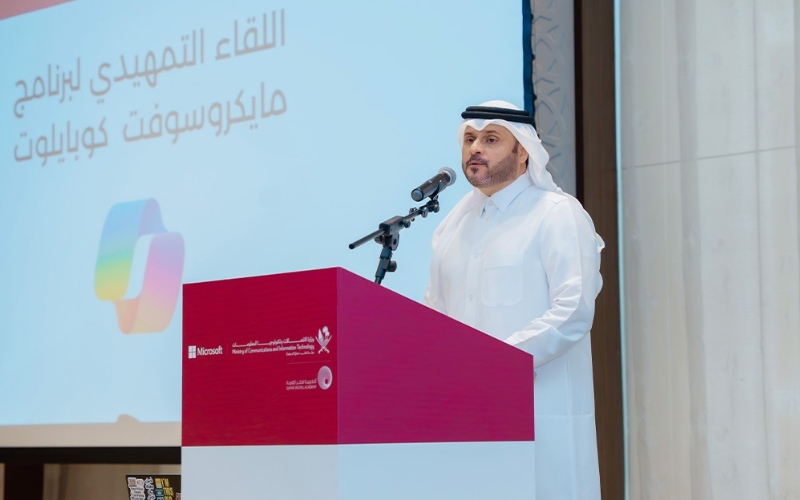
Doha, October 11, 2026 : The Ministry of Communications and Information Technology (MCIT), in cooperation with Microsoft, presented the results of the second cohort of the Microsoft 365 Copilot Adoption Program at a meeting for leaders and representatives of 17 government and semi-government entities. The meeting covered usage and adoption indicators, training progress, the development of AI agent use cases, participating entities’ experiences, and priorities for the next phase.
Sami Mohammed Al Shammari, MCIT’s Assistant Undersecretary for Infrastructure and Operations Affairs, said the second cohort’s results show clear progress in adopting Microsoft 365 Copilot across participating entities. He said they underscore the importance of the partnership with Microsoft in helping employees use AI in their daily work.
Al Shammari described what has been achieved so far as an important foundation for the next phase. That phase will focus on expanding usage, developing higher-value use cases, and strengthening the technology’s institutional impact in support of more efficient government work.
Figures presented at the meeting showed more than 8,000 active users, an adoption rate of 69.6 percent among 12,260 licensed users, and roughly 2.1 million actions and tasks recorded with the tool. MCIT said these indicators reflect the growing scale of use across participating entities and give a basis for tracking adoption and finding ways to expand use across institutional tasks and processes.
The meeting also reviewed the program’s skills development efforts, with 508 training sessions delivered to more than 9,000 employees. These included foundational training, executive leadership sessions, use case discovery workshops, specialized training, and skills development for the teams supporting adoption within each entity. The training covered multiple functional areas, helping align it with actual business needs and strengthen employees’ ability to use the tool effectively.
Participants also discussed the role of communications campaigns, activation activities, and learning resources in supporting employees and encouraging sustained usage, alongside progress monitoring through dashboards and periodic reviews.
Discussions covered the latest developments across 96 AI agent use cases under the program, along with selected practical demonstrations exploring ways to improve processes and make greater use of institutional knowledge. The aim is to move from individual use of the technology toward applications more closely aligned with the priorities and needs of participating entities.