

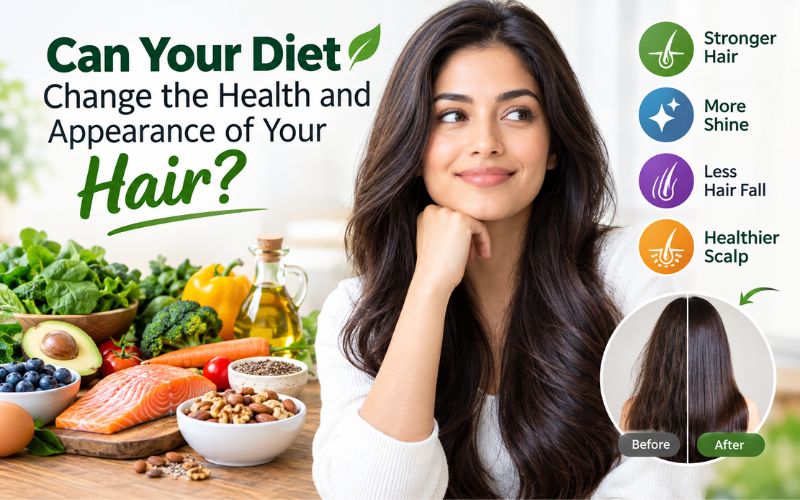
The right shampoo, conditioner or hair mask can make your hair look good, but what you eat determines whether or not it looks healthy, shiny and strong. What you eat provides the nutrients necessary for growing healthy hair, strengthening hair strands, and keeping your scalp healthy.
If you eat a diet which doesn't contain enough of the vitamins and minerals needed for good health then it can cause you problems with your hair. This includes thinning of your hair, drying out of your hair and increasing the amount of hair that falls out. However, if you have a well-balanced diet you will be providing your hair with all the nutrients it requires to continue to develop and remain in good condition.
Let's explore how your daily food choices can affect your hair.
1. Protein Helps Build Strong Hair
The primary component of hair is keratin, a type of protein. Therefore, to ensure that you have strong and healthy hair, your body must provide an adequate supply of protein.
When you aren't eating enough protein, your hair can become weak, brittle and thin over time.
Include protein-rich foods such as:
Eggs
Milk and yoghurt
Lentils and chickpeas
Paneer
Fish and chicken
Nuts and seeds
These foods added to your meal will aid in the supporting of your body's natural hair growth cycle.
2. Iron Supports Healthy Hair Growth
Iron is essential for the function of red blood cells to transport oxygen to all areas of the body, which includes the hair follicles. People with low iron levels may experience hair loss.
Iron is found in a variety of foods including: spinach, beans, lentils, pumpkin seeds and lean meats.
Combining foods high in iron from plants with those rich in Vitamin C, like citrus fruits (oranges, lemons) and vegetables (tomatoes), may enhance the way your body absorbs the iron.
3. Omega-3 Fatty Acids Support Scalp Health
Omega-3 fatty acids are a group of essential fatty acids that contribute to our body's general well-being. Additionally, these types of fats are believed to help keep our scalp healthy and promote proper functioning of our hair.
You can include omega-3-rich foods such as:
Salmon and sardines
Walnuts
Chia seeds
Flaxseeds
Soybeans
A diet with an equal amount of healthy fats will help keep the natural functions of your skin and scalp healthy.
4. Vitamins Help Maintain Healthy Hair
There are many vitamins that are necessary for healthy hair. Vitamin A promotes cell growth, and Vitamin C supports collagen formation and enhances iron uptake.
Vitamin D is necessary for healthy hair growth. Vitamin E has antioxidant properties.
Foods like carrots, sweet potatoes, citrus fruits, almonds, sunflower seeds and eggs should be part of what you eat.
However, it is generally unadvisable to take large amounts of vitamins via supplementation unless you have had consultation with your doctor. Some forms of nutrient over-consumption may lead to hair loss.
5. Stay Hydrated for Overall Hair Health
Water is needed to allow your body to operate correctly. While increased consumption of water won't lead to rapid hair growth, hydration does promote good physical health.
Make water your primary beverage during each day. In addition, you may want to add water-rich foods (e.g., cucumbers, watermelon, oranges) to your diet.
6. Avoid Crash Diets and Skipping Meals
If you are following an extreme diet or consistently skipping meals, you will not receive the proper amounts of vitamins and minerals. Rapid weight loss and insufficient calories may lead to transient hair shedding.
Instead, eat balanced meals containing protein, healthy fats, fruits, vegetables and whole grains.
Final Thoughts
The way you eat can affect how strong, healthy and good looking your hair is. When you eat many types of food that are full of nutrients, it gives your body the things it needs to help make sure your hair grows well.
Food alone cannot resolve all of your hair issues. Additionally, genetics, hormones, stress, medical problems and how you treat your hair will all play a role in your hair's overall condition. When experiencing rapid, severe or ongoing loss of hair, seek medical advice from a doctor so they can determine what is causing the issue.
Healthy hair begins when you develop healthy routines, and eating well is one of those routines.